
Last updated November 15, 2026
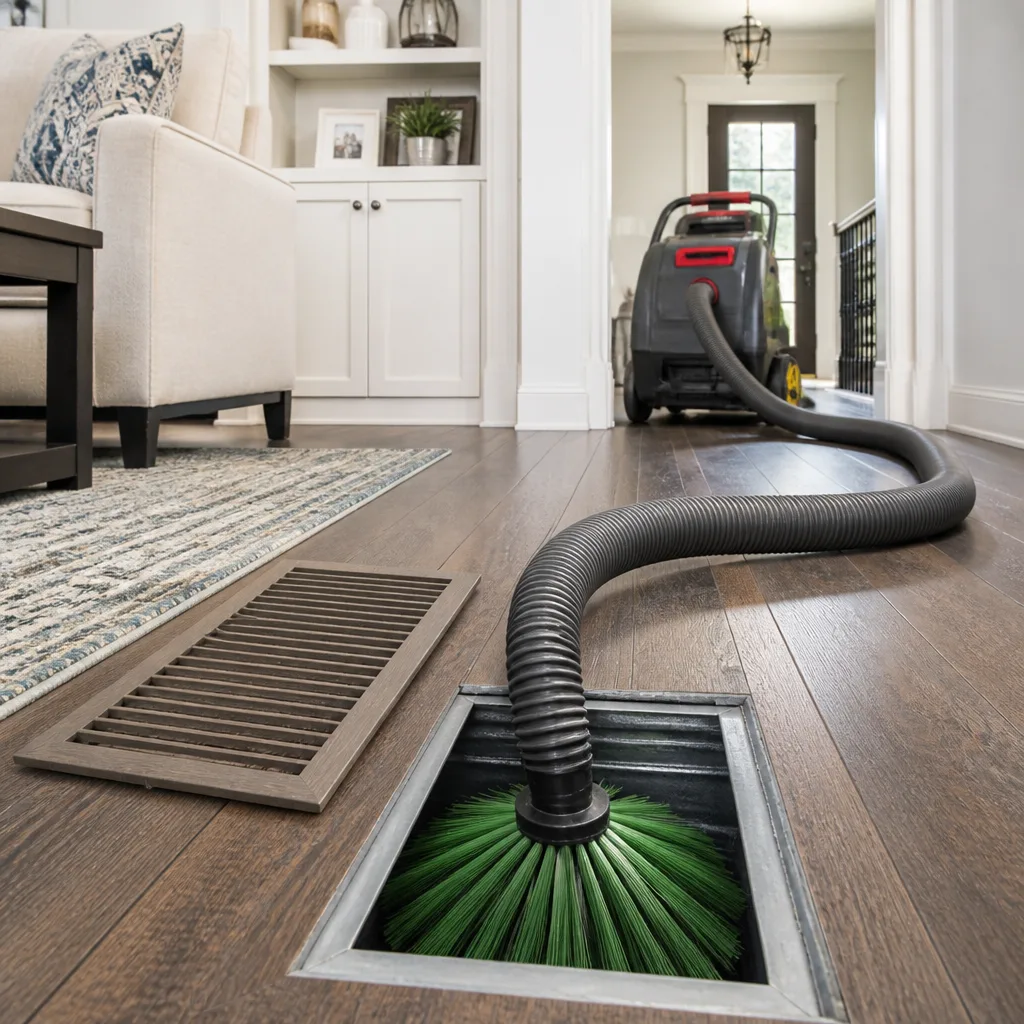 Whole-home duct cleaning
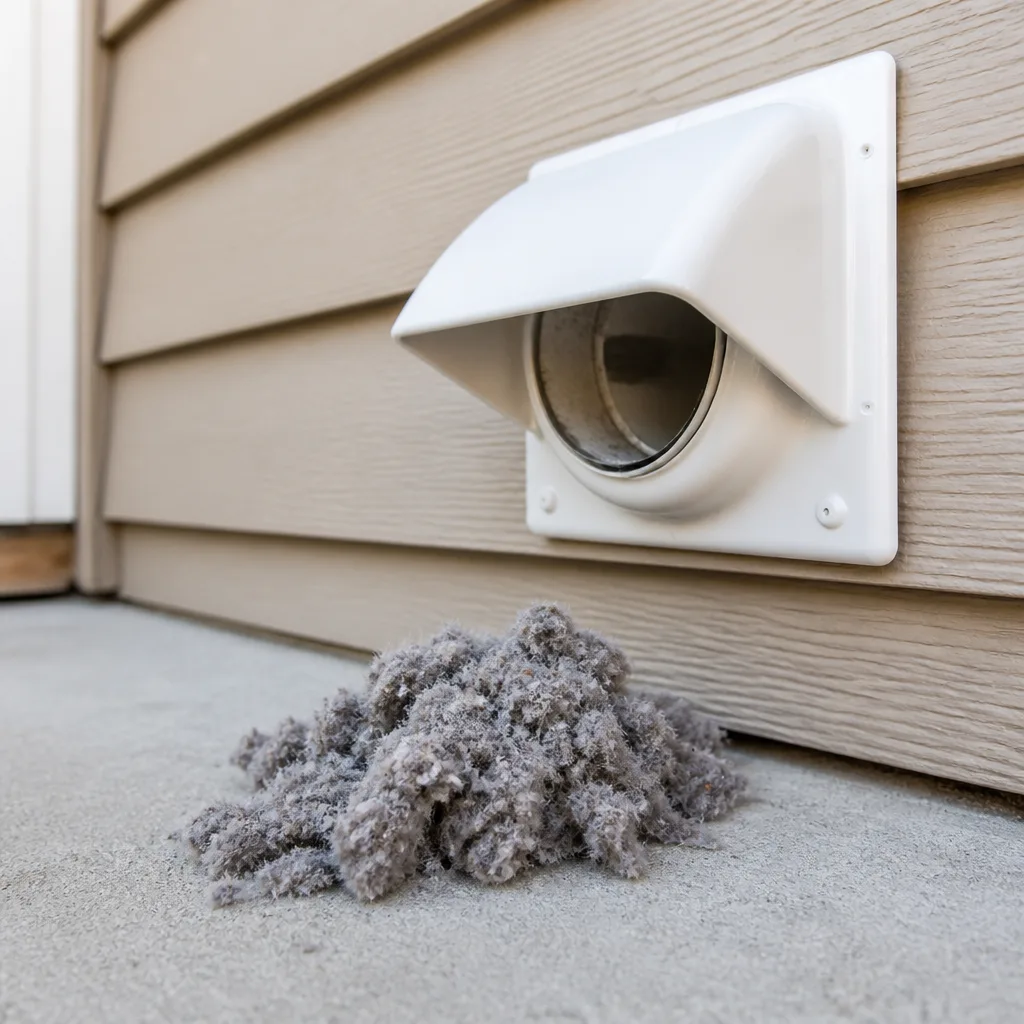 Dryer vent cleaning
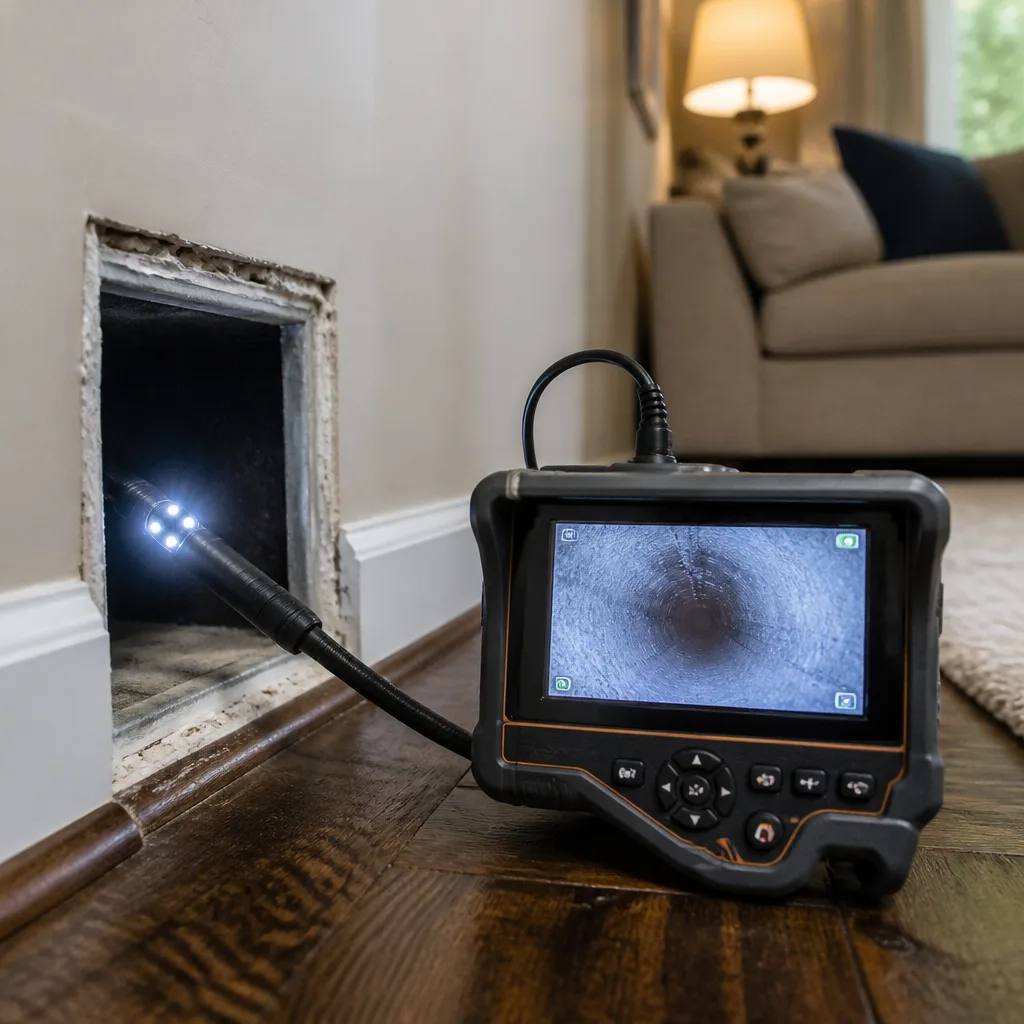 Camera inspection
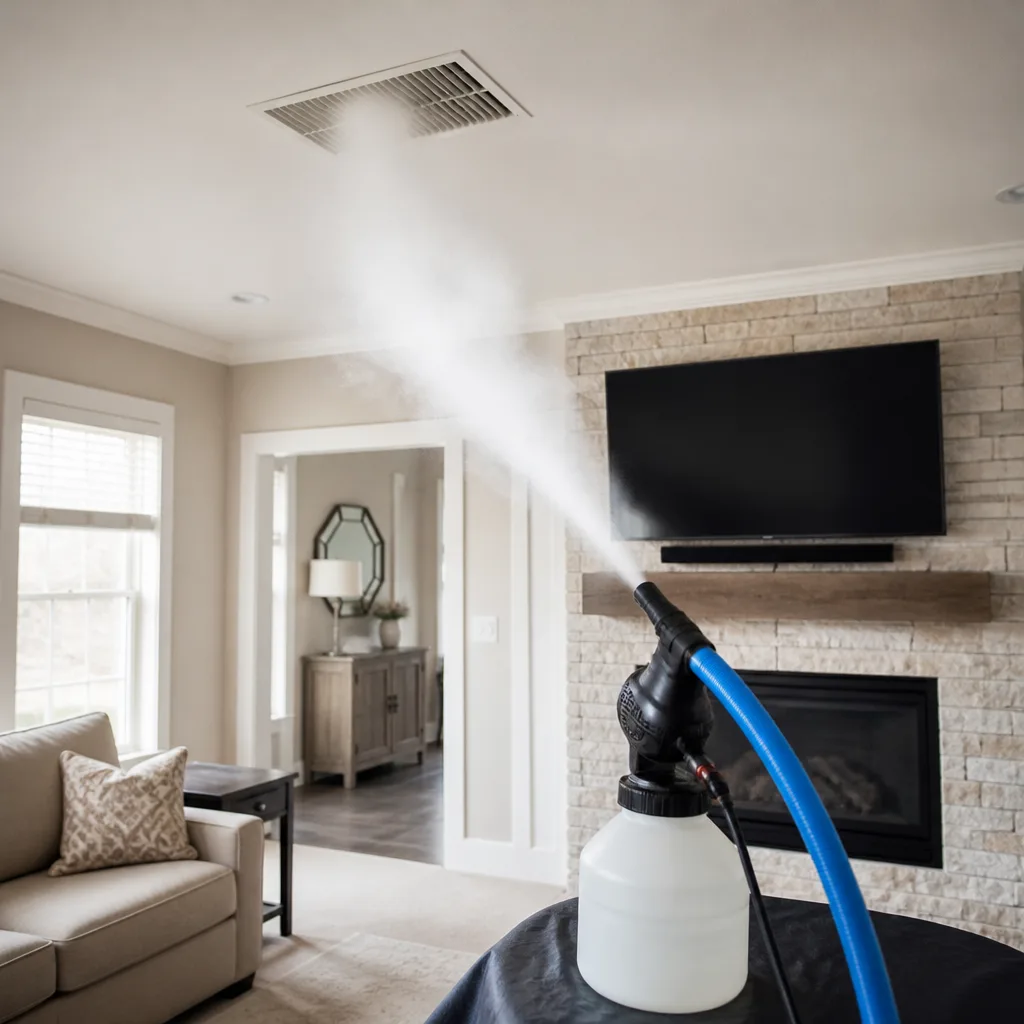 Sanitizing & deodorizing
Whole-system duct and dryer vent check with before-and-after photos - you see exactly what came out of your vents
That "$99 whole-house special" is a bait ad - the real number appears once they are in your hallway, or the "clean" is a shop-vac at the register. We photograph the inside of your ducts before and after instead.
Air Duct Cleaning Warning Signs: An Edmond Homeowner’s Reference Guide
Dust on a supply register is the sign most guides lead with, and it’s usually the wrong one. In most Edmond homes, a dusty register face traces back to a filter that’s too restrictive, a filter slot that doesn’t seal, or a return grille pulling air from a workshop corner. None of those need a duct cleaning. The signals that actually point to system-wide particulate loading are quieter: a fine grey film on the ceiling around a diffuser, a musty smell that strengthens when the blower kicks on, a bedroom that never catches up to the thermostat no matter what you set. This guide covers how to read those signals yourself, in your own Edmond house, without a salesperson steering the diagnosis.
Quick Answer
The warning signs that actually justify professional duct cleaning in Edmond are system-wide particulate loading you can see on ceiling surfaces near registers, odors that change with blower operation, measurable airflow imbalance between rooms, and visible debris after a renovation. Surface dust on the register face alone is usually a filter or airflow issue, not a dirty duct system. Look for patterns the whole house shares, not single grilles.
Styles & brands we work with
- Whole-home duct cleaning
- Dryer vent cleaning
- Camera inspection
- Sanitizing & deodorizing
Table of Contents
- Register Dust vs. System-Wide Loading: How to Tell the Difference
- What Four Odor Patterns Tell You About Your Ductwork
- Using Room-by-Room Airflow as a Diagnostic Tool
- After a Renovation: Edmond’s Drywall Dust Problem
- Cleaning Problem or Duct Integrity Problem?
- What Edmond’s Humidity Does to Duct Interiors
- Filter and Filtration Signs You Can Check in Ten Minutes
- What a Real Inspection Looks Like Before You Agree to Anything
Register Dust vs. System-Wide Loading: How to Tell the Difference
Every duct system in Edmond carries some dust. Air moves, dust settles, and a thin even film on the blades of a supply diffuser is ordinary. The question worth asking is whether that dust is coming from a filter problem, a leak, or the interior of the duct run itself.
Here’s the practical distinction. Surface register dust tends to concentrate on the discharge face of the grille and on the blades. It wipes off easily, and it comes back in places where the air velocity is highest. That’s the signature of dust that never made it to the filter because air was bypassing the filter frame.
System-wide particulate loading looks different. You’ll see it as:
- A fine, even film on horizontal surfaces just below and to the side of supply registers, not just on the grille itself
- Visible dust trails or dark streaks on white ceiling paint near diffusers in older Edmond homes with textured ceilings
- Debris falling from the register when the blower first starts in the morning
- Dust patterns that appear in three or more rooms, not just the ones closest to the air handler
Those four indicators together suggest the contamination is inside the duct volume, not on its face. That’s the point where agitation and extraction, not a new filter, is the right answer. A single dusty grille in one hallway is not.
What Four Odor Patterns Tell You About Your Ductwork
Smell is the most reliable diagnostic tool a homeowner has, because odor reports a specific cause if you read the pattern. The trick is noticing whether the smell appears when the blower starts or whether it’s constant.
A musty, wet-basement smell that strengthens about ten seconds after the fan kicks on usually points to moisture and biological growth inside the duct run or on the evaporator coil. In Edmond’s humid summer months, this is the pattern we hear about most, and it usually traces back to a return duct pulling air from a damp crawl or a condensate pan that isn’t draining cleanly.
A burnt or hot-metal smell is different and more serious. That pattern can mean debris has collected near the heat exchanger, and it deserves a shutdown and a technician, not a cleaning appointment. Don’t run the system on a burnt smell.
A chemical or new-plastic odor is common in newer Edmond builds and recently renovated homes, and usually traces to off-gassing from new materials, sealants, or a freshly installed coil. It’s a ventilation question more than a duct cleaning question.
And a flat, dusty, “old house” smell with no obvious moisture is the least dramatic of the four, but often the most accurate sign of loaded ductwork. There’s no easy home test for it. Observation over a week of running the blower will tell you more than any single sniff.
Using Room-by-Room Airflow as a Diagnostic Tool
Airflow imbalance is a diagnostic. If a bedroom upstairs in an Edmond house never quite reaches the setpoint while the living room overshoots, that’s information about restriction in the duct run, not just about the thermostat.
You can test this without equipment. Take a thin strip of tissue or a sheet of toilet paper and hold it against the face of each supply register on a normal day with the system running. Note how far it deflects and how hard it pulls. Do the same at every return you can reach. Then compare:
- Registers that pull strongly, registers that barely move the paper
- Rooms that heat or cool fast versus rooms that lag by a noticeable margin
- Whether the lagging rooms share a branch or a common trunk
- Whether the pattern changes after you replace the filter
If three supplies pull weakly and all sit on the same branch, restriction or a disconnection in that branch is the likely candidate. If weak pull is scattered with no pattern, the filter, the blower, or the main trunk is the more probable cause. Either way, you’re now diagnosing with evidence, not vibes.
Rooms that are cold in winter and hot in summer on the same branch often share a duct that’s either disconnected in the attic or crushed behind a wall in a way that limits flow year-round. That’s the kind of finding our duct cleaning Edmond visits regularly uncover, and no amount of cleaning a restricted branch will restore the airflow until the restriction itself is addressed.
After a Renovation: Edmond’s Drywall Dust Problem
Edmond remodels constantly, and drywall dust is the single most common short-term contaminant inside ductwork here. A kitchen or bathroom redo throws a fine, alkaline gypsum powder into the return air stream if the system runs during construction, and it settles throughout the duct volume where gravity and velocity let it rest.
What drywall dust looks like inside a system: a uniform light grey dusting across every interior surface, increasing in density toward the air handler. It’s not clumped like lint and it’s not black like organic growth. It coats the flexible liner of flex runs and clings to the sheet metal of trunk lines. From the register, it appears as a fine haze on the first foot of duct interior when you pull the grille and look in with a light.
A few things to check after any renovation in an Edmond home:
- Did the crew cover the return registers with taped plastic for the full job, or only while sanding?
- Did the system run at all during sanding or drywall finishing?
- Did anyone replace the filter after the final sanding passes, or is it still the construction filter?
- Are there visible drywall particles, screws, or paper scraps inside a return boot within arm’s reach?
If you find grit or paper down inside a return boot, cleaning will not fix the problem by itself. A proper visit includes looking for construction debris that has traveled downstream, which is why we bring rotational brushes and HEPA extraction to a post-renovation assessment rather than a shop vac and hope.
Cleaning Problem or Duct Integrity Problem?
This distinction is where a lot of duct cleaning spending goes wrong. Some homes in Edmond don’t have a dirty duct problem. They have ducts that no longer form a sealed circuit, and cleaning them does nothing because the contamination keeps coming in through the same gaps.
Signs you’re looking at an integrity problem, not a cleaning problem:
- Attic insulation fibers or pink dust found in a supply register in a home with attic-routed flex duct
- Air moving at a register while the system is off, or strong output at some registers when others are closed
- A hissing sound from a wall or ceiling cavity near the air handler
- Visible gaps at joints, disconnected flex runs, or crushed duct sections
- Dust returning within weeks of a cleaning that was done properly
Any of those say the duct system has leaks, disconnections, or crushed runs that need repair, not just cleaning. In our experience, an honest look inside a couple of registers tells you quickly which problem you have. That’s why we pair the cleaning service with air duct repair: diagnosing the real issue in the same visit beats cleaning a system and hoping the homeowner doesn’t notice it’s still losing air. If a duct run is pulling air from a hot attic or leaking into a crawl, no amount of agitation removes the reason the dust keeps coming back.
What Edmond’s Humidity Does to Duct Interiors
Edmond sits in a climate with long humid stretches from late spring through early fall, and that matters to duct interiors. Moisture doesn’t cause dust. It causes the biological conditions that let dust become something more.
The typical failure point isn’t the duct trunk in conditioned space. It’s the return duct pulling warm, humid attic or crawl air across a cool surface. Where cool coil-fin surfaces or cold duct walls meet that humid air, condensation forms. Once a surface stays damp, dust and lint become a food source, and that’s when the musty smell shows up.
What to look for in your own Edmond home during the humid months:
- A musty smell that arrives with the first cooling cycle of the day and fades later
- Visible moisture, staining, or sagging insulation at any accessible duct in the attic or crawl
- A condensate pan that isn’t draining freely, or standing water in the pan area
- Flex duct in the attic with torn or moisture-saturated outer jacket
If you find any of those, the moisture source has to be fixed before or alongside cleaning. A clean dry duct system stays clean longer than a clean wet one, every time. That’s also why we prefer to run the cleaning with HEPA-grade extraction and containment protocols: once the interior is dislodged, we don’t want it blown back into a damp environment.
If you’re already searching for a professional crew to look at this in person, the air duct cleaning page covers how a real visit works step by step and what’s included on a standard job.
Filter and Filtration Signs You Can Check in Ten Minutes
Before calling anyone, spend ten minutes on the filter and filtration setup. A surprising share of “dirty duct” complaints clear up here, and it’s the cheapest diagnostic you’ll ever run.
- Pull the filter. Check the MERV rating printed on the frame. In our experience, many Edmond homeowners have been sold a very high-MERV filter for a residential system that can’t handle the pressure drop.
- Look at the filter slot itself. If there’s a visible gap around the filter frame, air is bypassing the filter entirely and carrying unfiltered dust into the coil and the return trunk.
- Inspect the return grille and the boot behind it for lint accumulation. A lint mat on a return face is a filter seal problem more often than a duct problem.
- Confirm that every return in the house has a filter, or that the single-filter-at-the-air-handler arrangement is intact. Some Edmond homes have a filter grille in the hallway that was bypassed when a media cabinet was added.
- Note the filter change dates for a few weeks. A filter that loads in under three weeks is telling you something about the air quality coming into the system.
If the filter setup is right and the dust keeps coming, the next question is whether the filtration system itself is undersized for the house. That’s where upgraded media cabinets from brands like Aprilaire and Honeywell make a real difference, because they filter more air with less pressure drop than a restrictive 1-inch panel filter ever will. We’re authorized to install and service both, and sometimes the honest recommendation is filtration work, not cleaning. Saying so is part of the job.
What a Real Inspection Looks Like Before You Agree to Anything
The best defense against a duct cleaning sales pitch you’ll regret is knowing what a professional inspection actually looks like before you sign anything.
- Every accessible duct line gets looked at, not just the one behind the return grille. That means supply trunks, branch runs, and returns.
- The technician takes photos or video from inside several points along the system and shows them to you before proposing any work.
- You’re asked about allergy concerns, recent renovations, and any room the air isn’t reaching, because that context changes the diagnosis.
- A written scope is produced before work begins: which lines will be cleaned, what equipment will be used, and how containment is handled.
- The price is a single flat number for the system, agreed in writing, not a coupon rate that expands once the technician is on site.
If any of those steps gets skipped on the inspection, treat that as a warning sign in itself. The equipment a crew brings is the most reliable indicator of the process you’ll get: rotational brushes like Rotobrush mechanically dislodge buildup, and HEPA-grade extraction like Nikro captures what’s dislodged instead of blowing it into the room. Any crew that shows up with a shop vac and a leaf blower is not going to deliver the same result, no matter what the coupon said.
For homeowners in neighborhoods like Oak Tree, Gaillardia, or the older blocks near downtown Edmond with original ductwork, an inspection should also note the age and condition of the duct material itself. Sheet metal, flex, and duct board each fail in distinctive ways, and knowing which you have changes what to expect from the visit.
Common Mistakes to Avoid
- Mistaking a dusty register for a dirty duct system. Most surface dust on a grille comes from filter bypass or a filter that’s too restrictive for the system, and it clears up with a filter fix, not a full cleaning.
- Running the system during a renovation. Drywall dust settles across the entire duct volume when the blower is left on during sanding, and pulling it back out is more expensive than the plastic and tape it would have taken to cover the returns.
- Choosing a crew on coupon price alone. The single-flat-price-per-system structure is the standard a professional operation works from, and a bid that starts low and grows once the technician is inside usually skips the containment step that keeps the job clean.
- Assuming cleaning will fix airflow. Restricted or disconnected branches, closed dampers, and crushed flex runs are repair problems, and cleaning a restricted system doesn’t restore the air volume you were hoping for.
- Ignoring a burnt smell. A hot-metal or burning odor when the blower starts is a reason to shut the system down and call a technician, not to schedule a cleaning and hope it clears.
- Adding a very high-MERV filter to an older Edmond system. A filter that chokes airflow across the coil can look like a duct problem from the register side, and it stresses the blower in ways you won’t notice until something fails.
- Skipping dryer vent attention while scheduling duct work. Dryer vents are a fire risk, not just a maintenance item, and checking the vent at the same time as the duct system keeps both problems from going unnoticed.
See the difference
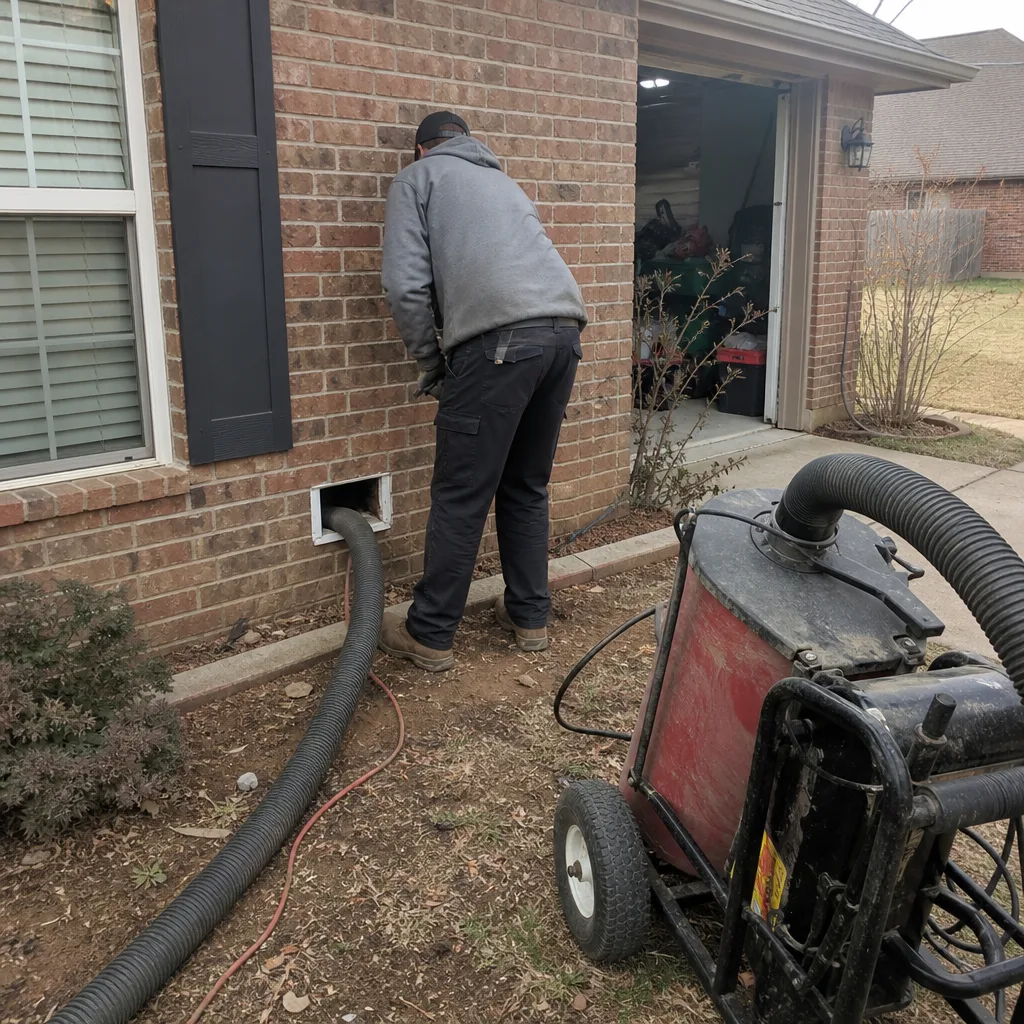 Before
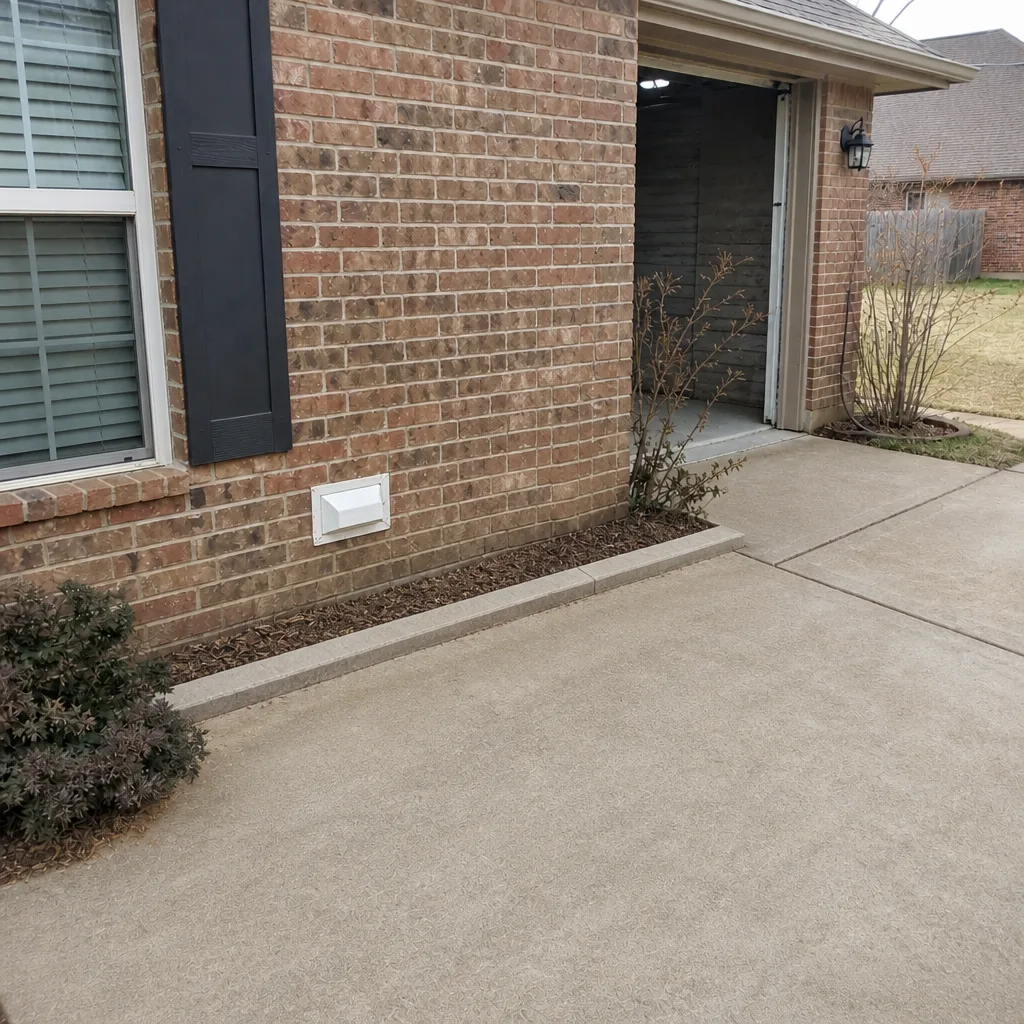 After
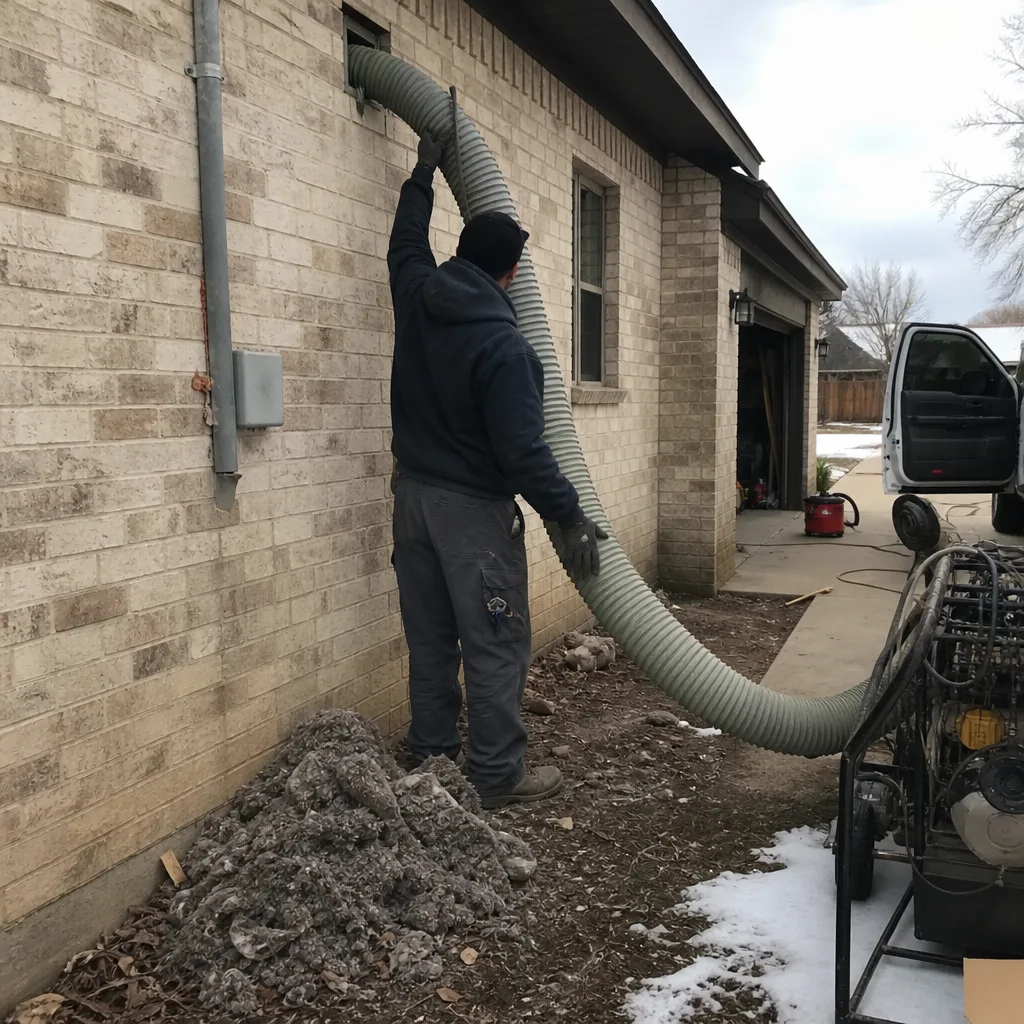 Before
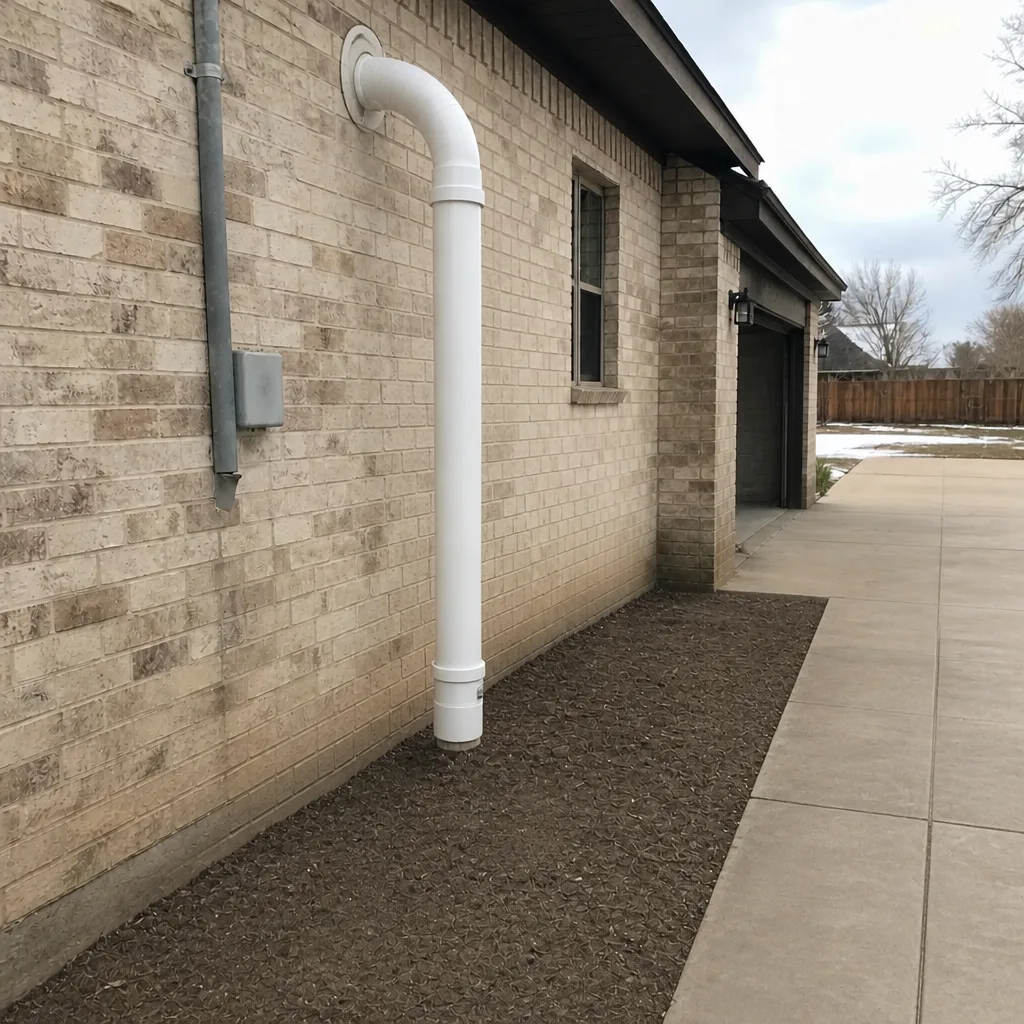 After
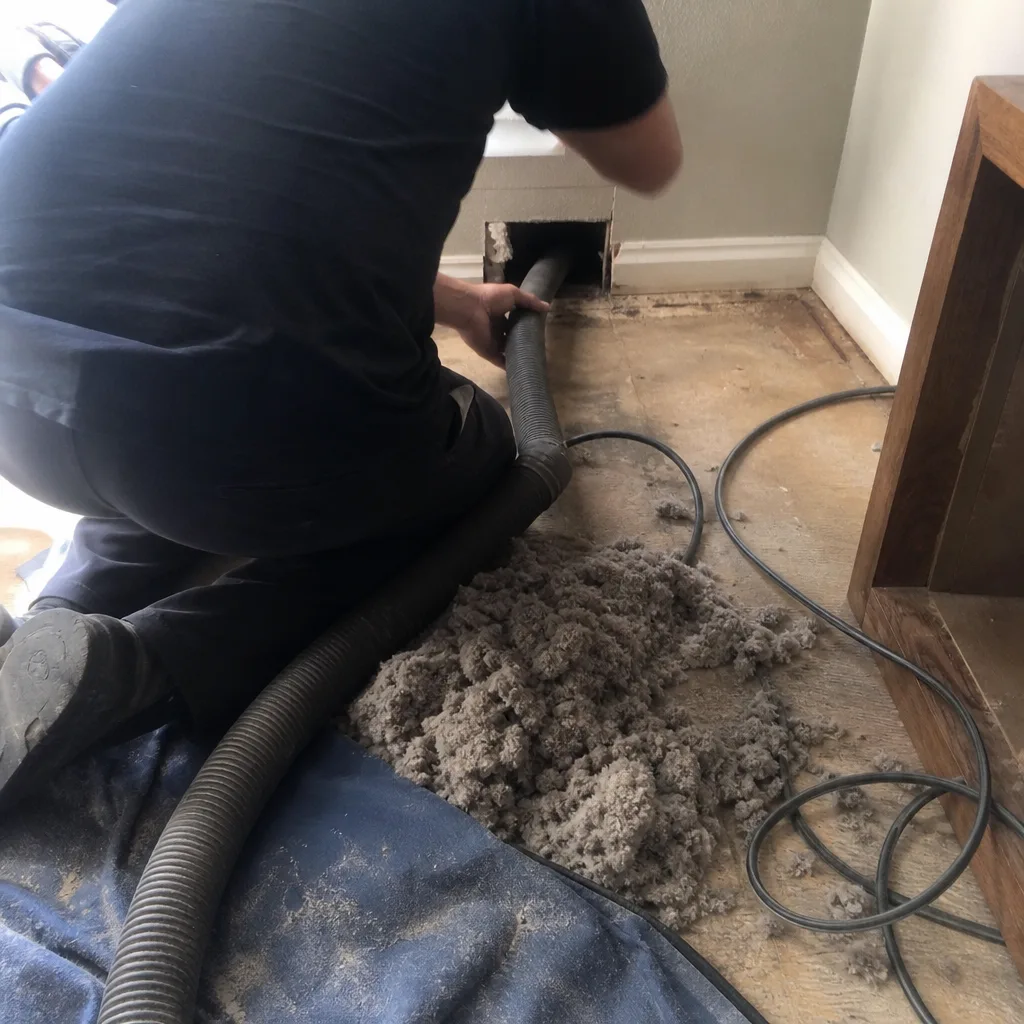 Before
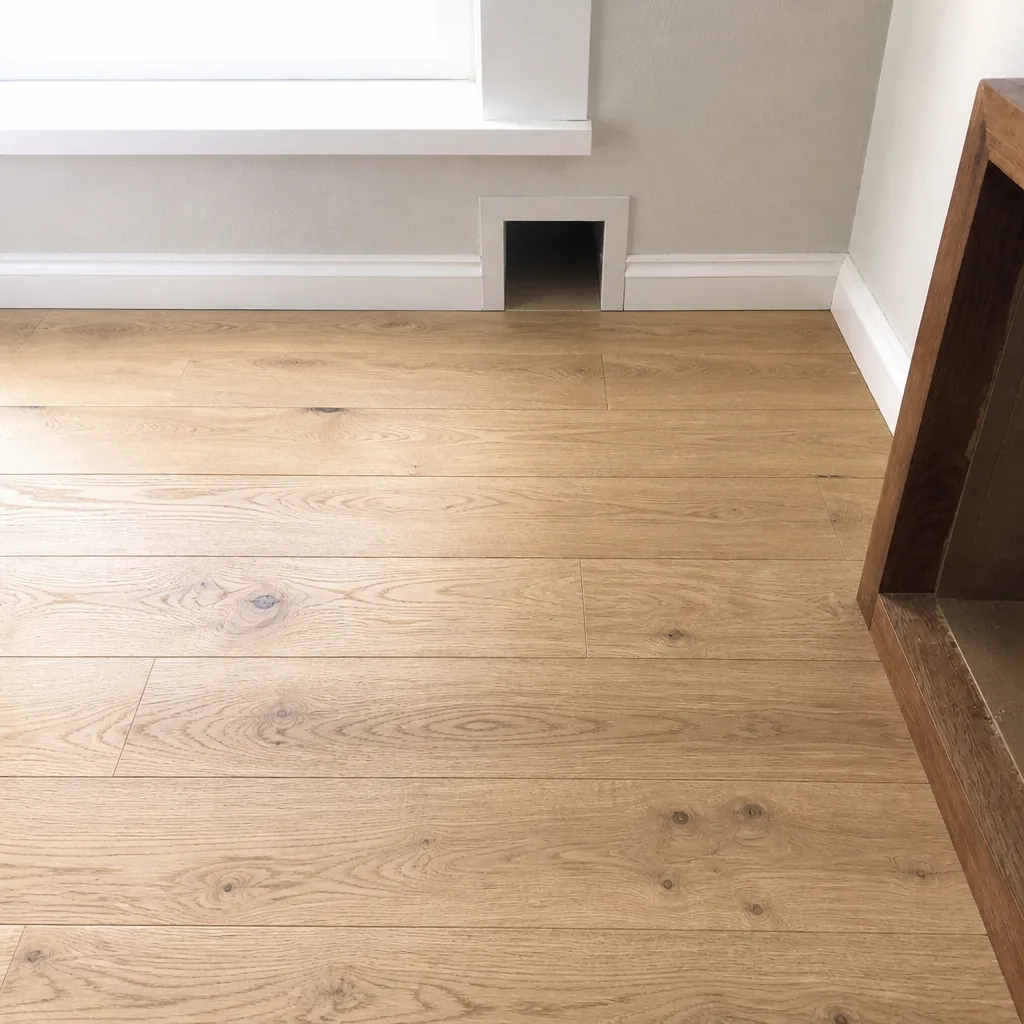 After
When to Call a Professional
Call when you’re seeing the pattern indicators: dust on ceilings near multiple registers, dust returning within weeks of a cleaning, a musty smell that arrives with the blower, visible debris after a renovation, or airflow imbalance with a clear branch pattern. Also call if you’ve found a disconnected or crushed duct, because repair and cleaning belong in the same conversation. For a dryer vent that’s slow to dry or shows lint buildup at the exterior hood, that’s a separate call worth making.
Duct Cleaning Edmond offers free estimates in Edmond. Call (844) 461-1541. We answer 24/7. Fast dispatch from 7am to 7pm, Sunday through Friday. Our technicians have up to 13 years of experience, and every job is priced as one flat rate for the system, agreed in writing before work starts.
If the picture you’re describing matches an airflow or integrity problem rather than a cleaning problem, we’ll say so. That’s a shorter call than a job that doesn’t solve what you called about.
Frequently Asked Questions
There’s no honest single number, because a home with a small trunk and two returns is a different job from a two-story house with three zones. The right approach is a flat price per system quoted after an inspection, and that’s the only structure we work from. Contact us for an exact quote, because estimates are free and a written number beats a range that doesn’t match your house. Call (844) 461-1541.
Low quotes usually skip the equipment. A crew without HEPA-grade extraction and mechanical agitation can’t dislodge and capture what’s actually in the duct, so the low price reflects a shorter, shallower job. The professional equipment a company brings to the house is the honest indicator of the process you’ll get, and it’s worth asking about before you book. Call for a free estimate that reflects the actual scope. (844) 461-1541.
You should see before-and-after photos of your own ducts, not stock images, and the technician should be willing to walk you through what changed. Any company that won’t show you the inside of your own system is telling you something. Ask for photos of each line cleaned, not a summary. Call to schedule an inspection. (844) 461-1541.
Most Edmond homes don’t need a scheduled duct cleaning at all. Trigger cleaning on an event: a major renovation, a new build, a water intrusion, a persistent odor, or a visible debris finding at inspection. Homes with allergies, pets, or heavy carpeting may justify a more frequent look, but the “every two years” rule gets sold more often than it’s earned. If you’re not sure whether you’re at that point, call and we’ll talk it through. (844) 461-1541.
Cleaning removes contamination from the duct volume. Repair fixes the duct structure when a run is disconnected, crushed, or leaking, which is the problem when the air you paid for ends up in the attic. Many Edmond homes actually need the repair more than the cleaning, which is why we quote both from the same inspection. Call for a free estimate that covers both. (844) 461-1541.
No, but it matters more than people expect. A clogged dryer vent is a fire risk, not just a maintenance item, and lint buildup at the exterior hood is the visual sign to watch for. We scope dryer vent cleaning as its own service for that reason, and it’s worth booking alongside a duct cleaning when you’re already having the house looked at. Call (844) 461-1541.
Sometimes. A look inside a return boot with a flashlight at arm’s reach can reveal debris, drywall grit, or lint matting, and if the visible section looks loaded, the rest usually does too. The signs that matter most, though, are the ones you’ll see in the house: pattern dust on ceilings, odor that changes with the blower, and rooms that don’t keep up. If you’re in Edmond and want a second opinion, call for a free estimate. (844) 461-1541.
The Bottom Line
The reliable duct cleaning signs are pattern signs, not single-grille signs. Dust on ceilings near multiple registers, odors that change with the blower, rooms that lag on airflow, or a renovation that left grit in the returns all say something a professional should look at. A dusty grille by itself usually doesn’t. Before you book anything, look at the filter, look at the returns, look at the rooms, and write down what you saw. Then ask for an inspection with photos and a written flat price, and call (844) 461-1541 to schedule a free estimate. We answer 24/7. Fast dispatch from 7am to 7pm, Sunday through Friday.
Written by the team at Duct Cleaning Edmond.