
Last updated November 15, 2026
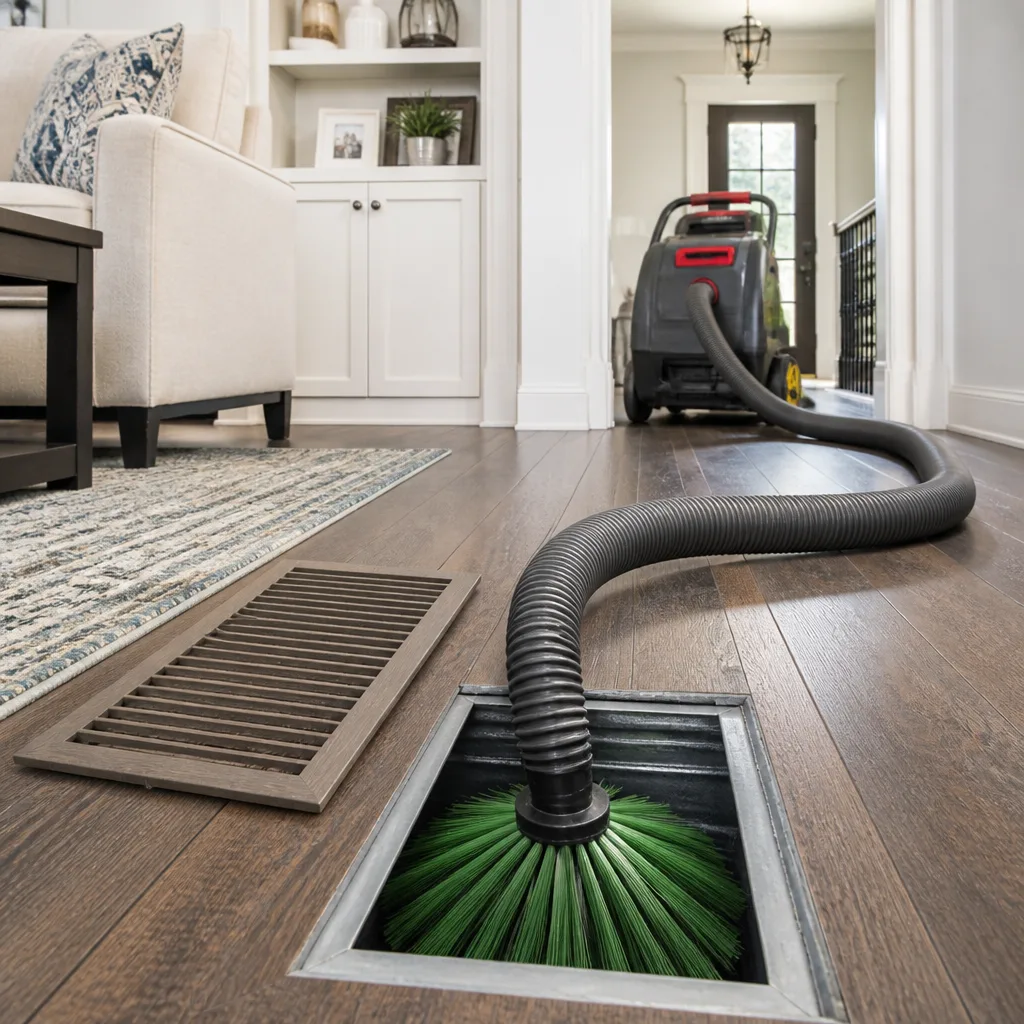 Whole-home duct cleaning
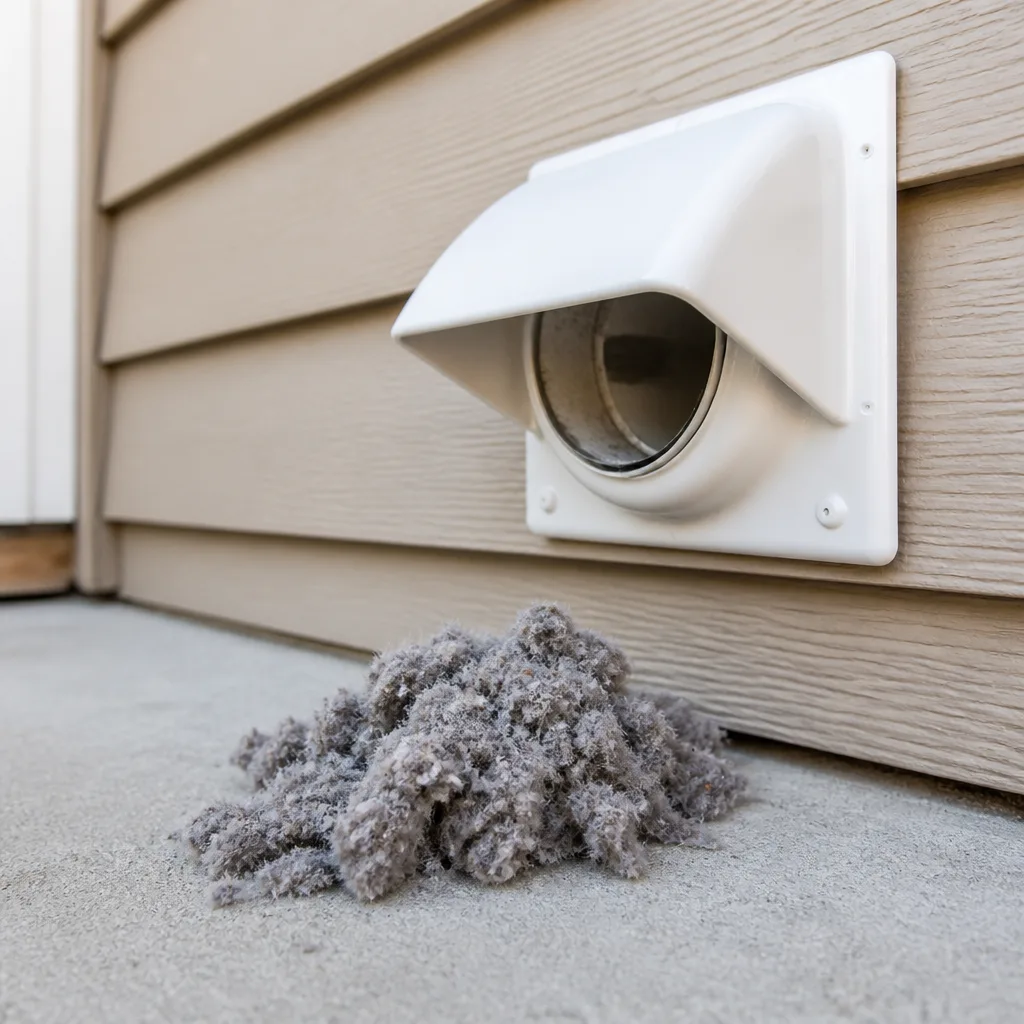 Dryer vent cleaning
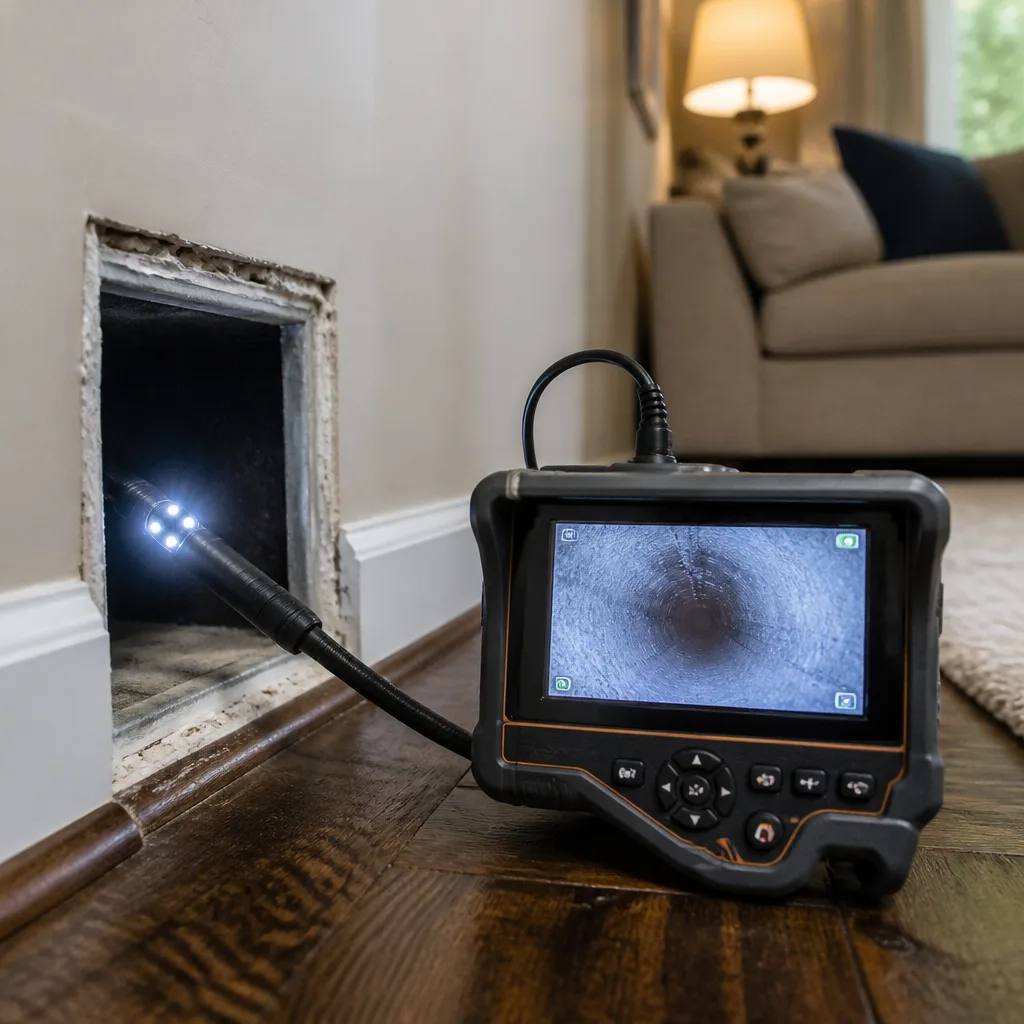 Camera inspection
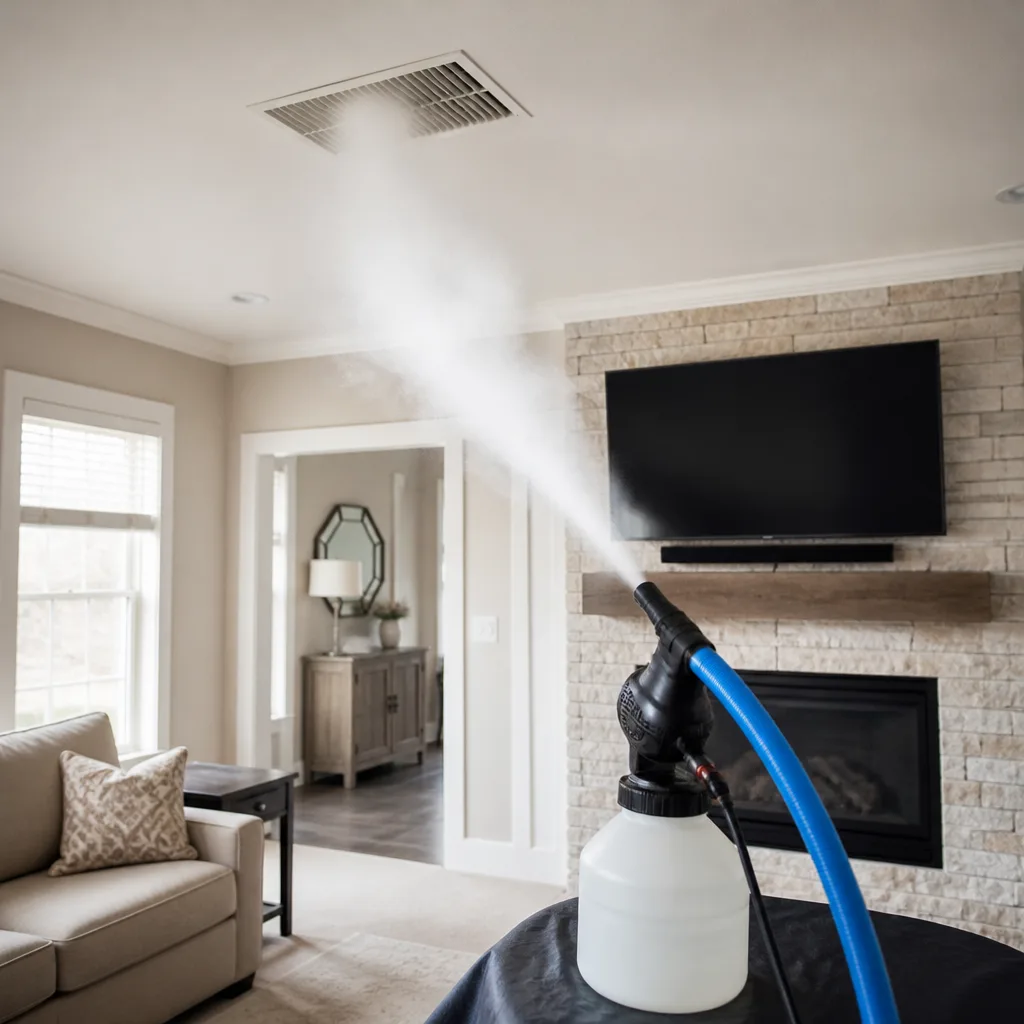 Sanitizing & deodorizing
Whole-system duct and dryer vent check with before-and-after photos - you see exactly what came out of your vents
That "$99 whole-house special" is a bait ad - the real number appears once they are in your hallway, or the "clean" is a shop-vac at the register. We photograph the inside of your ducts before and after instead.
DIY vs Professional Air Duct Cleaning: The Edmond Homeowner’s Decision Guide
A shop vac and a dryer vent brush can clean the first 18 inches of a supply duct effectively. Past that point, a homeowner is usually poking debris deeper into the system rather than removing it, and that’s often worse than leaving the ductwork alone. This isn’t a question of effort or willingness. It’s a question of whether consumer-grade equipment can physically reach, agitate, and capture what’s inside a residential duct system. For most of the ductwork in an Edmond home, it can’t, and this guide explains exactly where that limit sits, what you can legitimately handle yourself, and when the DIY approach starts costing you more than it saves.
Quick Answer
Professional duct cleaning beats DIY for anything beyond the register and the first stretch of visible duct, because consumer vacuums lose suction power over distance and can’t mechanically agitate buildup stuck to duct walls. Homeowners can and should handle register cleaning, return grille washing, filter changes, and dryer vent maintenance themselves. The line is drawn where the duct disappears behind drywall or into a slab chase; past that, you need professional gear that agitates and captures debris at the source.
Styles & brands we work with
- Whole-home duct cleaning
- Dryer vent cleaning
- Camera inspection
- Sanitizing & deodorizing
Table of Contents
- Why shop vacs fail past the register
- What you can honestly do yourself
- When DIY makes the professional job harder
- Edmond scenarios where professional cleaning isn’t optional
- What professional equipment actually does
- How to stretch the interval between cleanings
- Common mistakes to avoid
- When to call a professional
Why Shop Vacs Fail Past the Register
Suction doesn’t travel well. A shop vac rated at 150 cubic feet per minute at the nozzle drops to a fraction of that figure two feet into a rigid duct, and by fifteen feet it’s producing nothing you’d call meaningful airflow. The physics is straightforward: static pressure builds with distance, every bend and fitting adds resistance, and the flexible hoses most homeowners use are the worst offenders. A duct trunk line that runs 30 feet under a slab is a different universe from the six-inch flex run coming off a bathroom fan.
Here in Edmond, that matters more than it might elsewhere. Homes built through the 1980s and 1990s in neighborhoods like Fenwick and Copper Creek often have long trunk runs beneath the slab or through the attic, with multiple branch takeoffs feeding individual rooms. A homeowner standing at a floor register with a shop vac is reaching the first branch. The main trunk carrying the bulk of the system’s settled debris is fundamentally out of range.
The other half of the problem is agitation. Dust, dander, and construction debris bond to duct walls over time. Suction alone won’t break that bond, and that’s true whether you’re using a $99 shop vac or a $5,000 truck-mounted unit. What breaks the bond is mechanical contact, a rotating brush head scrubbing the duct interior while extraction captures what gets dislodged. No consumer vacuum offers that. Professional systems like Rotobrush exist precisely because suction alone isn’t enough. When we clean ducts in Edmond, the rotary brush platform mechanically agitates the buildup while HEPA-grade extraction pulls the loosened material out, a two-step process that consumer equipment can’t replicate at distance.
What You Can Honestly Do Yourself
Plenty of duct-adjacent maintenance is well within a homeowner’s reach, and doing it well extends the time between professional cleanings. The key is separating tasks that happen at the system’s edge from tasks that happen inside it.
Here’s what you can do yourself, and do well:
- Clean the floor and ceiling registers. Remove the grille screws, wipe the grille surfaces with a damp cloth, and reach into the visible few inches with a vacuum brush attachment. This knocks down the surface dust that gets pushed back into the room on the next cycle.
- Wash the return air grilles. Returns collect far more dust than supplies because they pull room air through. Pull them down once or twice a year, wash them in a utility sink with dish soap, dry them fully, and reinstall.
- Change the air filter on the furnace or air handler. This is the single highest-leverage task in the whole system. A clogged filter forces the blower to work harder and lets dust bypass into the ductwork. Most Edmond homes do well with a filter swap every 60 to 90 days, more often during pollen season or if you have pets.
- Clean the dryer vent yourself, up to a point. Pull the dryer out and disconnect the flexible connector, vacuum out what you can reach, and clean the exterior vent hood of lint. If the run goes more than a few feet through the wall, or you can’t see daylight at the exterior hood when you look down the pipe, you need professional dryer vent cleaning. That’s a fire-safety issue, not a maintenance chore.
- Vacuum the return duct opening. With the return grille off, you can often vacuum the first foot or so of the return plenum where large debris settles. Beyond that, leave it.
Everything on that list happens at the accessible edge of the system. That’s the dividing line. The moment the work requires reaching past the register boot into a branch run, the consumer toolset stops being effective.
When DIY Makes the Professional Job Harder
The worst outcome isn’t an ineffective DIY cleaning. It’s a DIY cleaning that pushes debris into spaces a professional can’t easily reach, or masks a problem that would have been diagnosed during a professional visit. We’ve seen all three of these scenarios play out in Edmond homes.
Pushing debris into inaccessible branches. A shop vac applied to a supply register can loosen debris on the near wall of the branch duct and drive it deeper into the trunk, where it settles at a fitting or takeoff. The problem goes from “uniform dust film” to “localized clump blocking airflow to a room.” That clump is harder to remove than the film was, and it’s now affecting system performance in a specific way.
Dislodging insulation lining. Many older Edmond homes have internal duct board or insulation lining on the trunk. Applied suction from the wrong angle can tear or partially detach that lining, and once it’s loose, it can travel into the air handler, block the evaporator coil, or flap and rattle every time the system cycles. That repair is a legitimate air duct repair job, not a cleaning job, which means a bigger scope than the homeowner started with.
Masking a moisture problem. Surface-cleaned ductwork looks fine. If the real issue is a leaking duct joint in a humid attic, a disconnected collar, or condensation on an uninsulated run, the visual cleanup hides the symptom while the moisture keeps feeding mold growth inside the duct. That problem gets worse and more expensive to address. Professional cleaning reveals those conditions because a trained eye is looking at the whole system, not just the visible interior of one register. When we perform air duct cleaning, we flag compromised joints and worn connections as part of the inspection, because cleaning a leaking system without noting the leak isn’t a complete job.
Edmond Scenarios Where Professional Cleaning Isn’t Optional
Certain conditions in an Edmond home mean DIY isn’t on the table, not because the homeowner lacks capability but because the contaminants involved require containment-grade equipment and a professional’s ability to verify that the system is clean when the work is done.
- Post-fire smoke residue. Smoke particles penetrate duct lining and deposit throughout the system. Surface cleaning at the registers does nothing for the smoke film further inside, which continues to off-gas into living spaces. Professional extraction with HEPA filtration is the only way to remove it.
- Rodent infiltration. Mice and squirrels get into ductwork through foundation gaps and attic penetrations. They leave droppings, nesting material, and urine residue. Cleaning that debris with a shop vac risks aerosolizing pathogens into the living space. Contained HEPA extraction with proper protective protocols is required.
- Renovation debris. Drywall dust, sawdust, insulation fibers from a remodel end up throughout the system, not just at the registers. The volume is typically far beyond what any consumer vacuum can manage, and the fine particles clog filters and coat blower wheels.
- Confirmed or suspected mold. Mold inside ductwork needs to be addressed with containment protocols to prevent cross-contamination between rooms. Consumer cleaning can spread spores through the home.
- Recent water damage or flooding. Even in an Edmond home that’s never flooded, a water heater failure, roof leak, or AC condensate overflow can introduce moisture into the plenum or ductwork. Once water has been in the system, the ductwork needs to be inspected and, if there’s visible growth, professionally cleaned.
For any of these, the answer isn’t “clean harder.” It’s “clean with equipment designed for the contaminant.”
What Professional Equipment Actually Does
The professional difference isn’t one machine. It’s a coordinated process where agitation, containment, and extraction work together. This is what separates a real cleaning from a blow-and-go operation, and it’s what makes it possible to clean the parts of the system a homeowner can’t reach.
Rotary brush agitation. A rotating brush head fed through the ductwork scrubs duct walls mechanically, breaking the bond between settled debris and the metal or flex surface. This is what Rotobrush systems do, and it’s the step most low-bid operators skip entirely, relying instead on air pressure alone.
HEPA-grade extraction. Nikro HEPA equipment captures dislodged debris at the source rather than letting it recirculate into the living space. That means the debris comes out of the duct and into a sealed container, not into your Edmond living room air.
Containment-grade negative pressure. Abatement Technologies containment tools hold the system under controlled negative pressure during cleaning, which prevents cross-contamination between rooms and keeps contaminants from escaping into the home while work is underway. This is the same standard used in professional indoor air quality remediation, and it’s a defensible reason to hire a professional over a coupon crew.
Repair capability. Cleaning reveals conditions. A compromised joint, a detached collar, or a sagging flex run needs to be fixed, not just cleaned around. We repair what we find, which means the same visit that surfaces a problem can correct it. If your system needs duct cleaning in Edmond and there’s a known issue, that combined scope is worth arranging up front.
Filtration and purification systems. Beyond the clean itself, we’re authorized to install and service Honeywell and Aprilaire air quality systems. If the underlying problem is particle load in the home air, a proper filtration upgrade alongside the cleaning makes the result stick.
How to Stretch the Interval Between Cleanings
For a typical Edmond home, a professional cleaning every three to five years is a realistic interval, and that number shifts based on how well the DIY maintenance gets done. Homes with pets, recent renovations, allergy sufferers, or heavy pollen exposure lean toward the shorter end. Homes with regular filter changes, clean returns, and no pets can stretch longer.
The strategic use of DIY maintenance is to protect the interval, not to replace the professional cleaning. Here’s the order of operations that works in an Edmond home:
- Set a filter schedule and stick to it. Write the date on the filter when you change it. Sixty to ninety days is the target for most homes. This one habit does more for duct cleanliness than anything else a homeowner can control.
- Clean registers and returns twice a year. Fall and spring, when the system is transitioning between heating and cooling, is a good rhythm. The grilles come off, get washed, get dried, and go back on.
- Watch the dryer vent on a schedule. Clean the lint screen every load. Vacuum the vent line and clean the exterior hood once or twice a year. If drying times get longer or clothes come out hot, stop and call for professional dryer vent cleaning.
- Inspect after any renovation. If drywall, insulation, or flooring work happened, plan a professional cleaning within a few weeks of completion. Renovation debris is a category of its own, not something to wait on.
- Watch for symptom signals. Increased dust on surfaces right after the system kicks on, musty odors from registers, visible debris at the supply grilles, or uneven airflow to specific rooms. Any of these means the interval is over early.
That combination, consistent filter changes, semi-annual register cleaning, and regular dryer vent work, extends the realistic interval to the upper end of that range without pretending to replace the professional cleaning itself.
Common Mistakes to Avoid
- Using a leaf blower to “blow out” the ducts. This is the classic mistake. It aerosolizes debris without capturing it, coating the inside of every room in the house in dust. In an Edmond home with a 30-foot slab trunk, it moves debris from one accessible spot to three inaccessible ones.
- Assuming a shop vac and a floor register equals “duct cleaning.” The first 18 inches isn’t the system. It’s the doorway to it. Calling that a cleaning and then skipping a professional visit for another five years lets the real buildup continue.
- Cleaning the ducts without changing the filter first. A clogged filter pushes dust back into the supply when the system runs. Clean ducts with a dirty filter go back to being dirty ducts within weeks.
- Trying to clean flexible duct runs with a rigid brush. Flex duct has a thin inner liner, and a brush applied at the wrong angle can tear it. Torn flex means replacement, not a repair, and it’s a common DIY casualty.
- Ignoring the dryer vent because it “looks fine.” Clogged dryer vents are a fire risk, not just a maintenance item, and the accessible exterior end can look clear while the run behind the wall is packed with lint. If you can’t see daylight at the exterior hood, get it looked at.
- Skipping professional cleaning after a renovation “because the dust will settle.” It settles into the ductwork. Then it blows back out with the next heating cycle. Schedule the cleaning after the dust settles, not instead of it.
- Assuming a cheap coupon price means a professional job. A low teaser price often means no mechanical agitation, no containment, and no HEPA extraction. The result can be ductwork that looks cleaner at the register and isn’t actually cleaner inside. This is the reason to ask about equipment and process before booking any Edmond duct cleaning.
See the difference
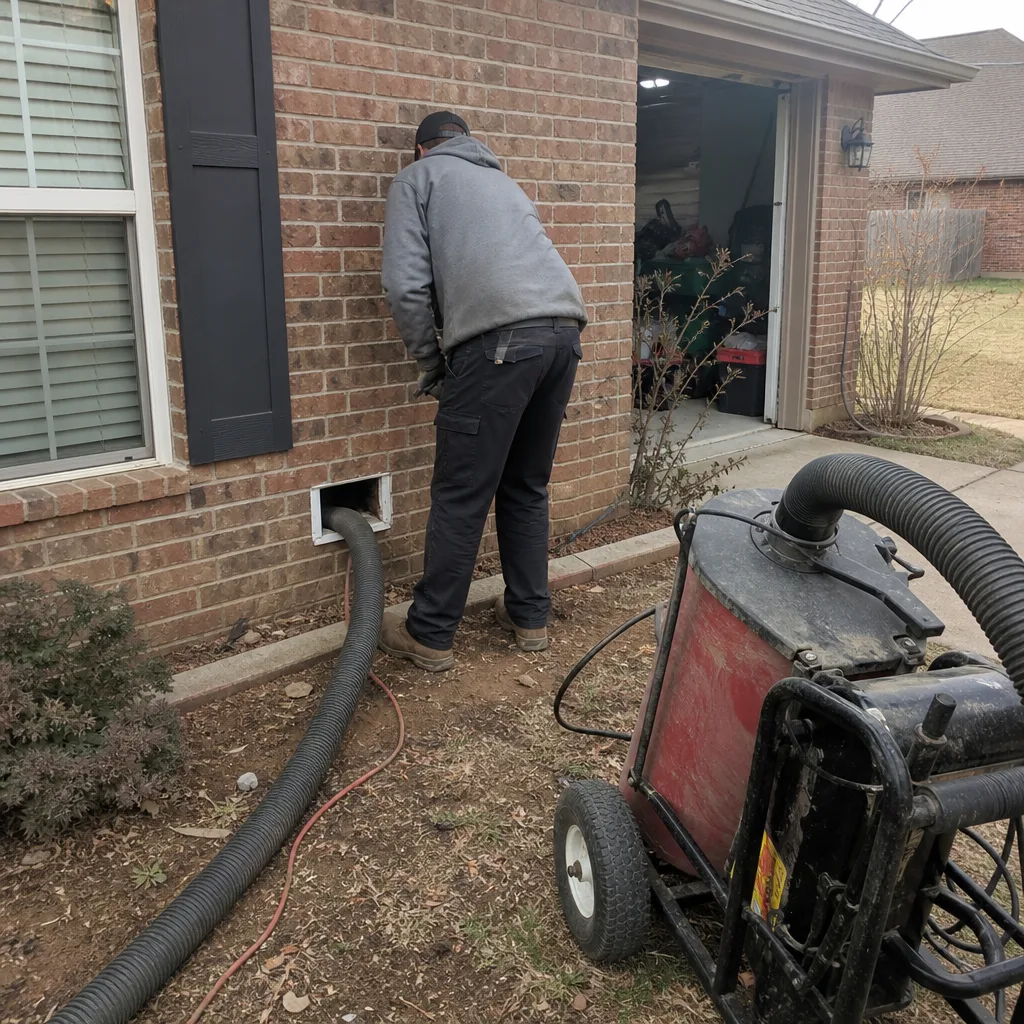 Before
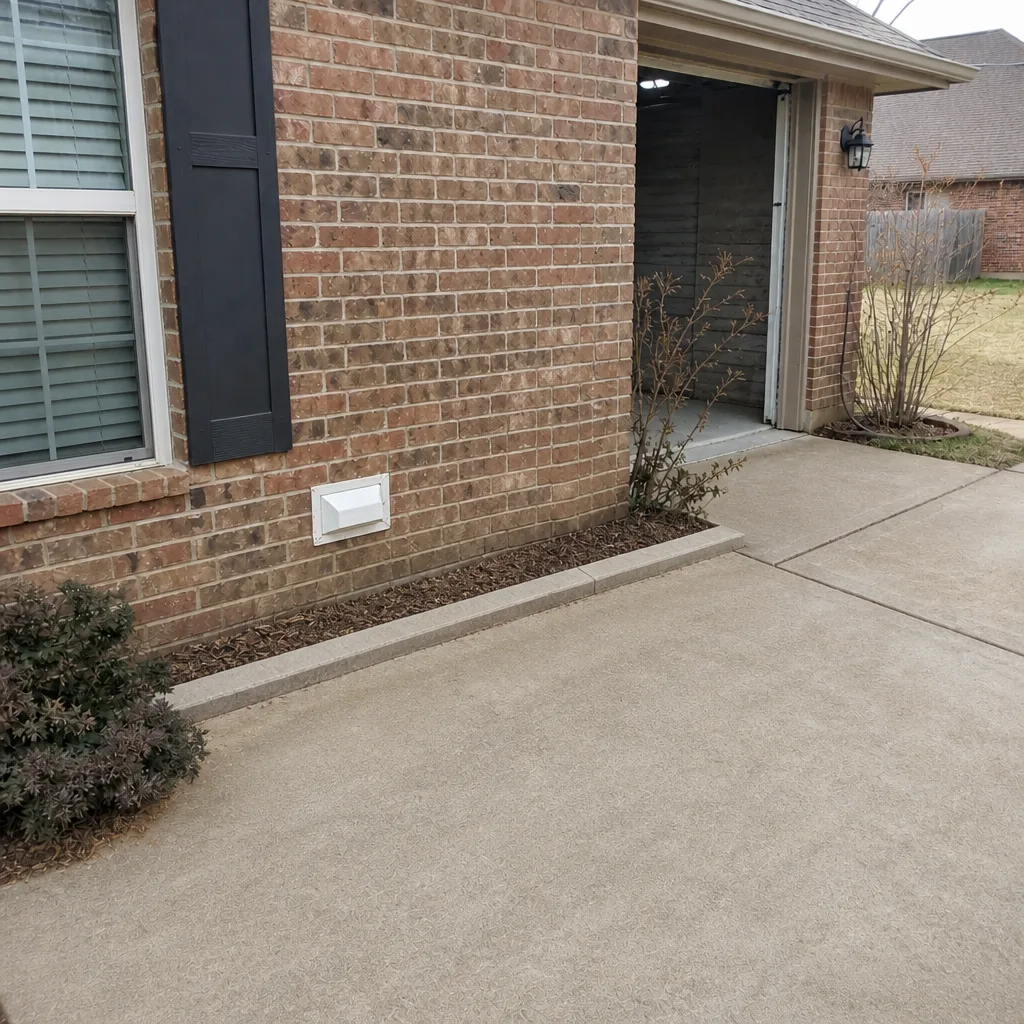 After
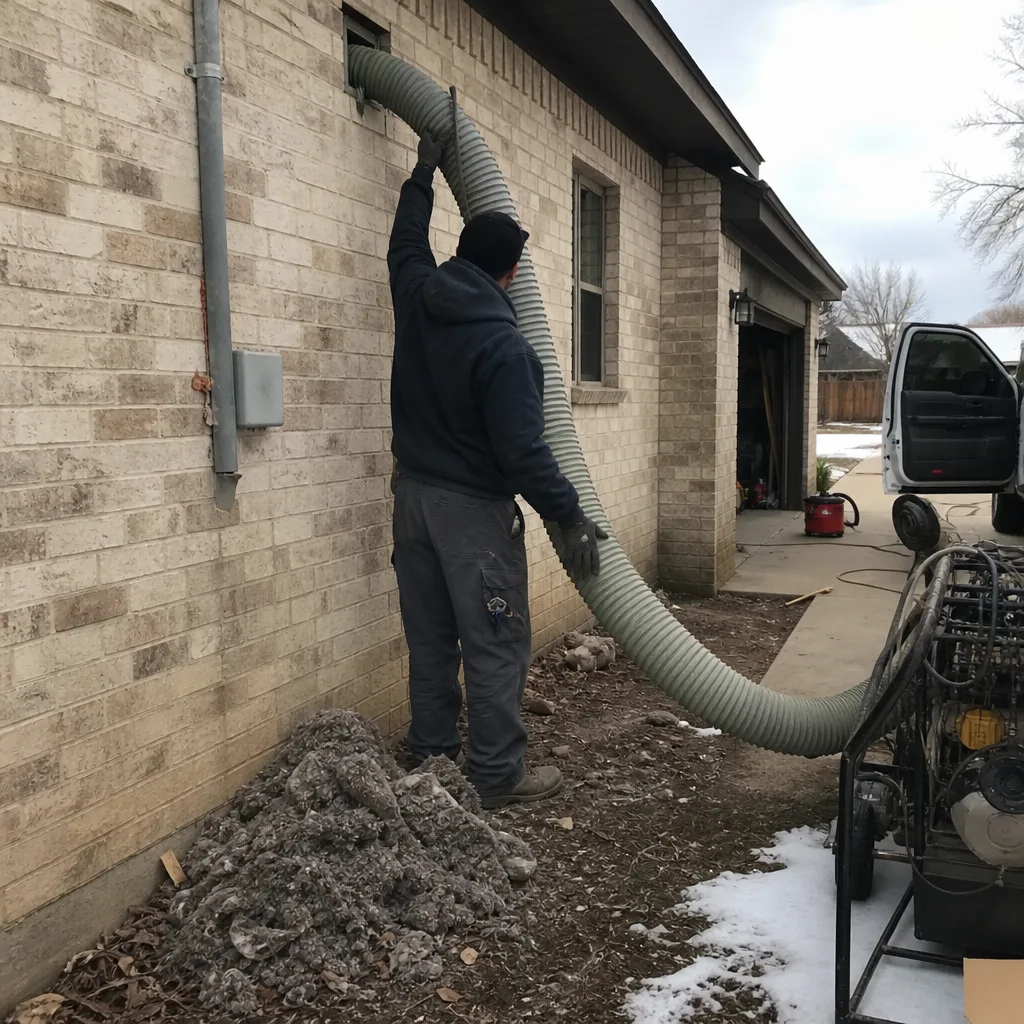 Before
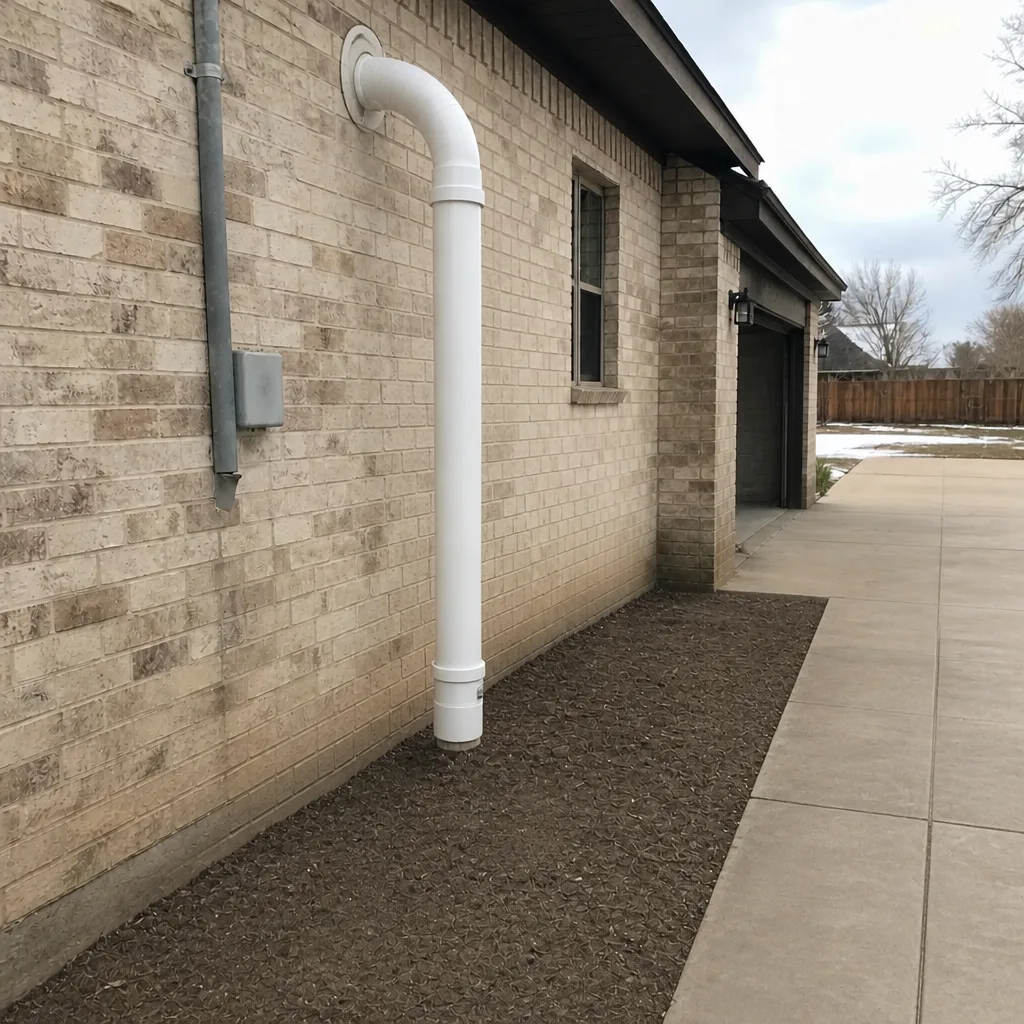 After
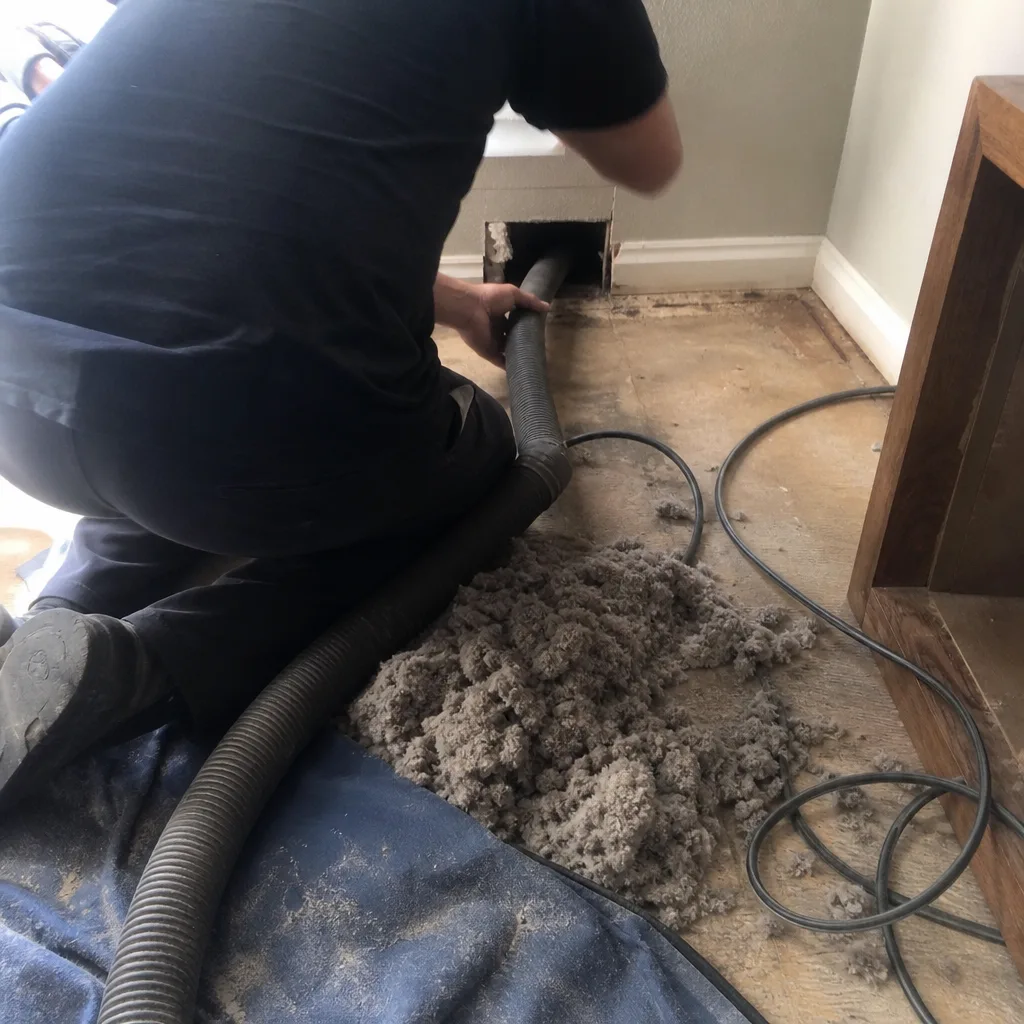 Before
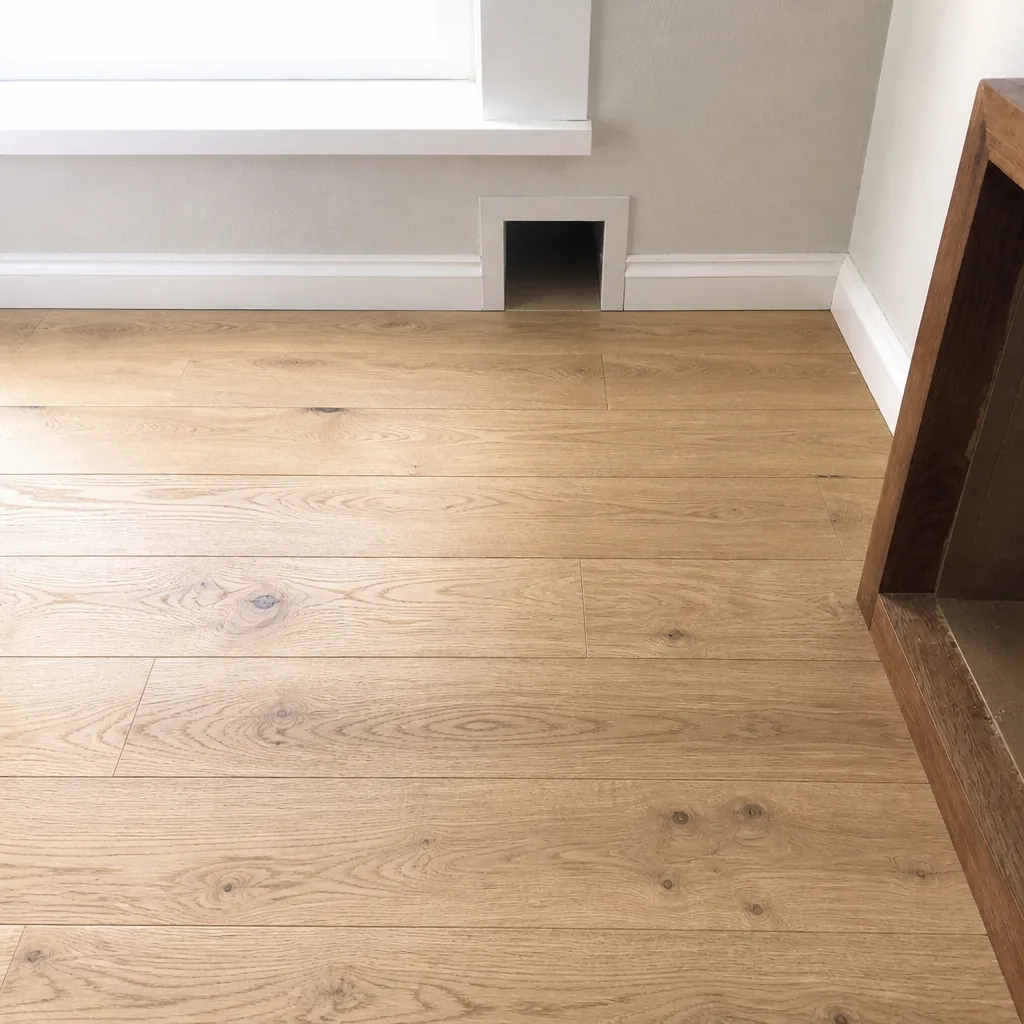 After
When to Call a Professional
Call a professional when the work needs to go past the register, when a contaminant is involved (smoke, rodents, mold, renovation debris), when the dryer vent run exceeds a few feet, or when the system is producing symptoms you can’t explain: musty odors, uneven airflow, or dust that appears immediately after the blower kicks on. Also call if DIY attempts have made things worse rather than better. Duct Cleaning Edmond offers free estimates in Edmond. Call (844) 461-1541. We answer 24/7. Fast dispatch from 7am to 7pm, Sunday through Friday. Estimates are free, and every job is quoted as one flat price per system agreed before work starts, with before-and-after photos of your own ducts so you can see exactly what the cleaning removed.
Frequently Asked Questions
Yes, for the portions of the system you can actually reach. Register cleaning, return grille washing, filter changes, and dryer vent maintenance are all legitimate DIY tasks in Edmond, and doing them consistently extends the time between professional cleanings. What doesn’t work is treating a shop vac at the supply register as a full duct cleaning. Call (844) 461-1541 for an exact quote on the professional portion, estimates are free.
It depends on the system size and configuration, which is why we quote one flat price per system after looking at the actual ductwork, not a per-vent teaser figure that inflates once the technician is on site. The written estimate sets the final price, and it’s agreed before any work starts. Call (844) 461-1541. Estimates are free.
Because the equipment doesn’t match the price. A low quote usually means no mechanical rotary brush, no HEPA extraction, and no containment, just a shop vac and a leaf blower at the registers, which can push debris deeper rather than removing it. Our process uses Rotobrush agitation and Nikro HEPA extraction under Abatement Technologies containment, and we quote one flat price per system so the number doesn’t move once we’re in your home. Call (844) 461-1541 for a free estimate.
Ask for before-and-after photos of your own ducts, and ask what equipment is being used before the job starts. Any legitimate duct cleaner should be able to explain the agitation, extraction, and containment steps in plain terms; if the answer is vague, that’s your answer. We photograph the system before and after on every job. Call (844) 461-1541 for a free estimate.
For most Edmond homes, every three to five years is a realistic interval, with the shorter end applying to homes with pets, allergy sufferers, recent renovations, or a history of smoke or rodent intrusion. Consistent filter changes and register cleaning stretch that interval toward the longer end. Call (844) 461-1541 to talk through your specific system, estimates are free.
Yes, in three common ways: tearing the inner liner of flex duct with a brush, detaching internal insulation lining from the trunk, or pushing settled debris into a branch you can’t reach so it starts blocking airflow to a specific room. Any of those turns a potential cleaning into an air duct repair. If your DIY attempt has already gone sideways, call (844) 461-1541. A free estimate will tell you what you’re actually looking at.
The Bottom Line
The DIY-versus-professional question comes down to reach and equipment, not willingness. Registers, return grilles, filters, and the accessible end of the dryer vent are yours to handle, and handling them well extends the time between professional cleanings to the upper end of three to five years for most Edmond homes. Beyond the first foot of duct, consumer suction loses effectiveness, and the agitation and containment required to actually remove buildup sit with professional gear. When the work involves smoke, rodents, mold, or renovation debris, professional cleaning isn’t a preference; it’s the only option that captures the contaminant instead of moving it around. Our technicians have up to 13 years of experience, we repair what we find, and every job is quoted as one flat price per system before work starts.
Ready for a real answer on your ductwork? Call Duct Cleaning Edmond at (844) 461-1541 for a free estimate. We answer 24/7. Fast dispatch from 7am to 7pm, Sunday through Friday. Licensed and insured, with before-and-after photos of your own system so you can see what came out. If your Edmond home is ready for duct cleaning in Edmond, this is where to start.
Written by the team at Duct Cleaning Edmond.