
Last updated November 15, 2026
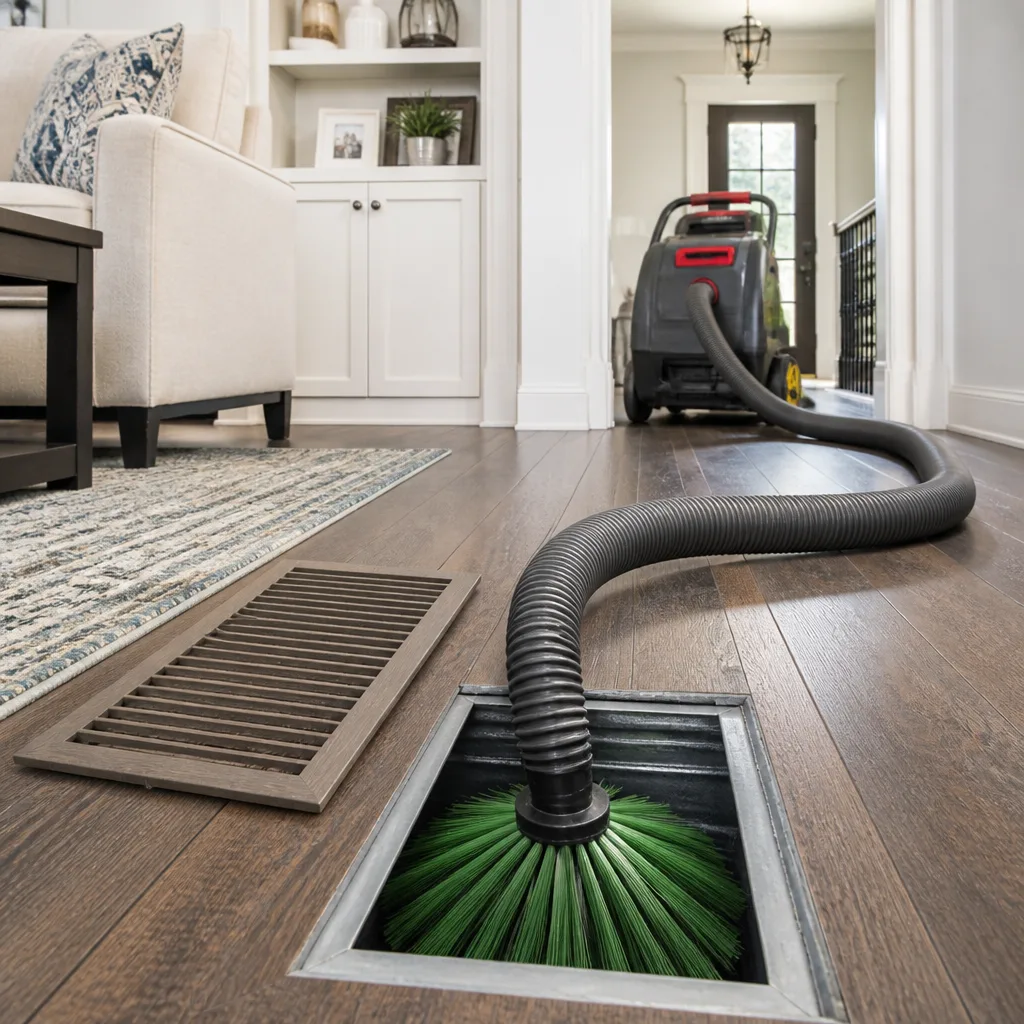 Whole-home duct cleaning
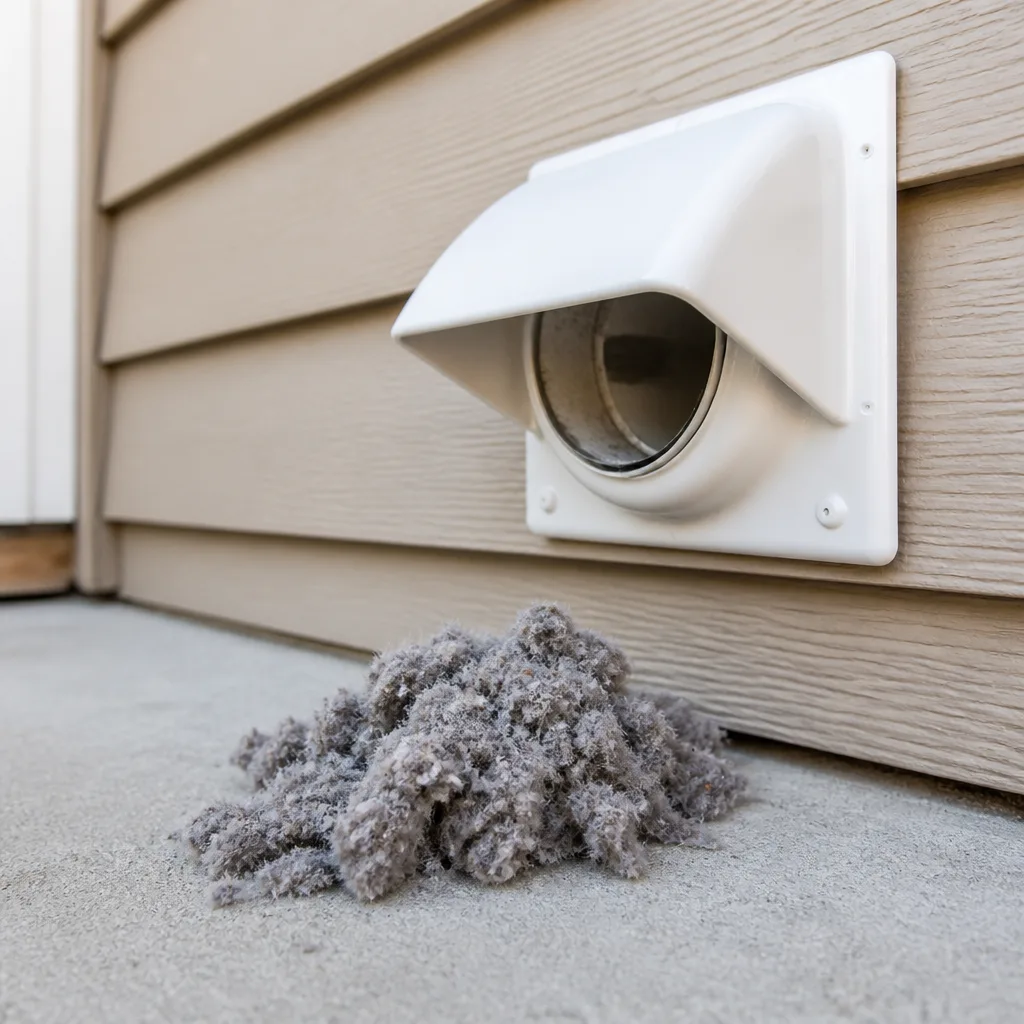 Dryer vent cleaning
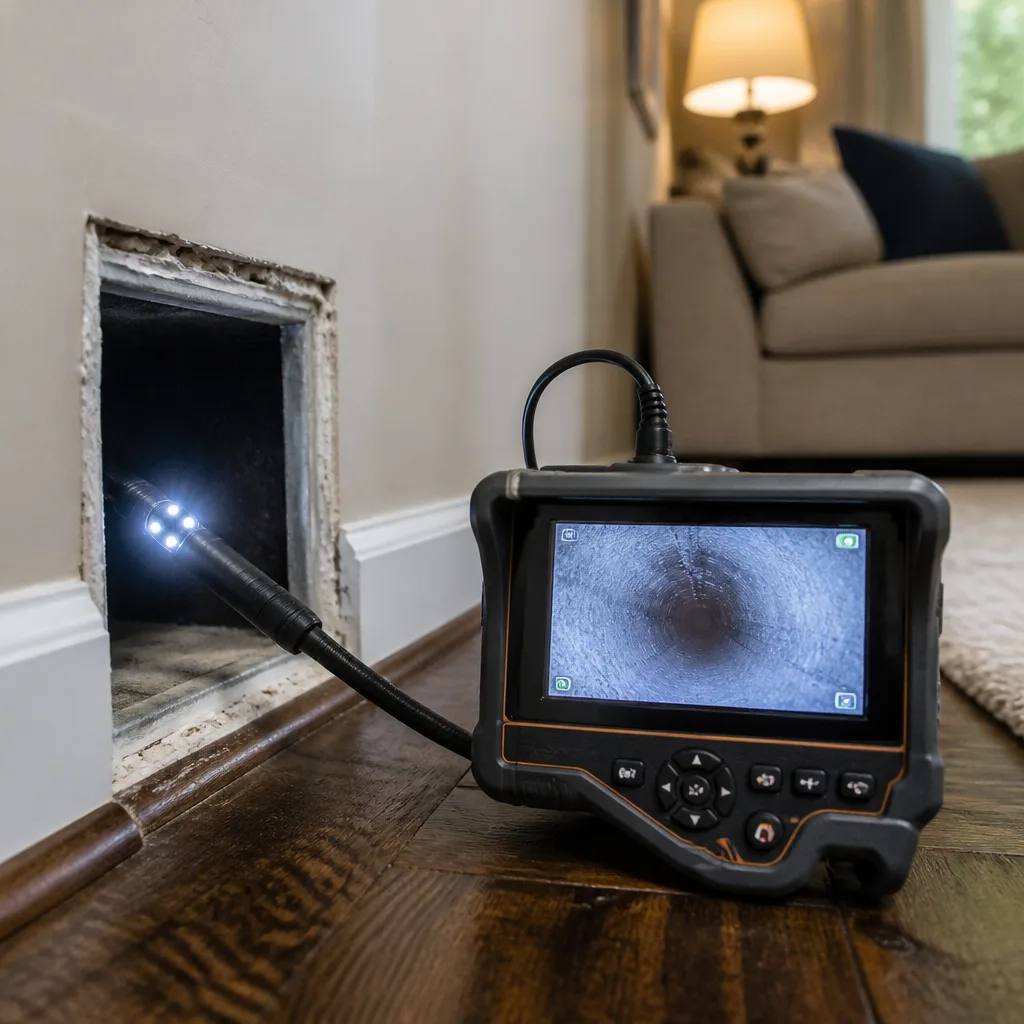 Camera inspection
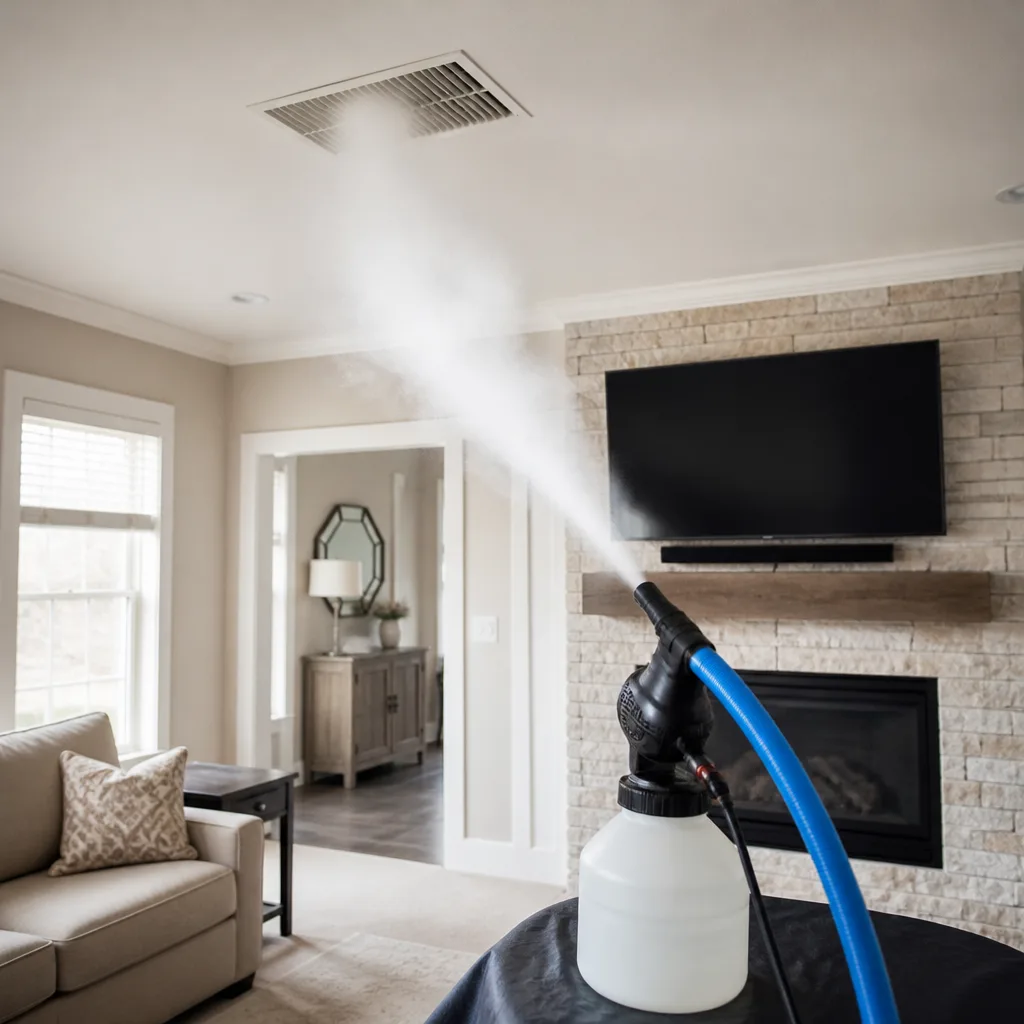 Sanitizing & deodorizing
Whole-system duct and dryer vent check with before-and-after photos - you see exactly what came out of your vents
That "$99 whole-house special" is a bait ad - the real number appears once they are in your hallway, or the "clean" is a shop-vac at the register. We photograph the inside of your ducts before and after instead.
Air Duct Cleaning Troubleshooting in Edmond: Common Problems and How to Fix Them
If your vents blow dust two weeks after a cleaning, the problem isn’t your filter. It’s that the cleaning didn’t actually remove the contamination, it just moved it. That’s the uncomfortable truth most duct cleaning ads in Edmond don’t want to explain. Most “problems” homeowners try to diagnose on their own, like persistent dust, uneven airflow, or a faint musty smell, have a root cause locked inside the duct system itself. Cleaning a duct doesn’t fix a collapsed flex run. It doesn’t fix a broken damper. And it definitely doesn’t fix contaminated debris that never left the system. This guide treats your ducts the way a contractor treats a mechanical system: as a set of diagnosable fault points, each with a symptom you can read and a fix that actually addresses the cause.
Quick Answer
The most common air duct cleaning problems in Edmond, OK come down to three root causes: debris that was redistributed instead of extracted, duct integrity failures like disconnected or crushed flex runs, and airflow imbalance from dampers, seals, or returns. Cleaning solves only the first. The other two need inspection and repair, often alongside professional cleaning from a contractor who does both. If your symptoms returned shortly after a previous clean, you’re probably looking at a repair problem, not another clean.
Styles & brands we work with
- Whole-home duct cleaning
- Dryer vent cleaning
- Camera inspection
- Sanitizing & deodorizing
Table of Contents
- Dirty Ducts vs. Broken Ducts: How to Tell the Difference
- Cleaning That Redistributes vs. Cleaning That Extracts
- What Different Odors Tell You About Your Duct System
- Why Some Rooms Still Don’t Get Air After Cleaning
- How to Inspect Your Own Accessible Duct Sections
- Edmond Climate and Housing Factors That Affect Ducts
- When Duct Repair Beats Duct Cleaning
- The Dryer Vent Problem Homeowners Overlook
Dirty Ducts vs. Broken Ducts: How to Tell the Difference
The single most useful thing you can learn about your HVAC system is this: dirt is a cleaning problem, but a broken duct is a repair problem, and treating one as the other wastes your money. A dirty duct is restrictive and contaminating. A broken duct is often more restrictive because it’s dumping conditioned air into a crawlspace or attic instead of into your rooms. The two can look identical from the register, which is exactly why so many homeowners pay for a second cleaning that doesn’t solve the symptom they actually feel.
Here’s how the symptoms shake out:
- Dirty duct signals: visible dust buildup inside the register boots, dark streaks around supply vents, “dusty house smell” that improves briefly after cleaning, and visible debris at the air handler filter slot.
- Broken duct signals: a room that stays warm or cold no matter what the thermostat says, a duct run that feels loose, sagging, or disconnected inside a crawlspace or attic, and higher energy bills that don’t match your usage.
- Both: recurring dust even after cleaning, because the contamination source (a leak pulling attic air, a disconnected return) is still there.
In Edmond, this matters because a lot of the housing stock includes attic and crawlspace duct runs that are easy to knock loose during renovations or attic work. A cleaning crew that doesn’t inspect for leakage or disconnection will clean a broken system and hand you the same symptom back. That’s why we always inspect before we clean and duct cleaning in Edmond is offered alongside air duct repair, not as a separate transaction you have to schedule with someone else.
Cleaning That Redistributes vs. Cleaning That Extracts
This is the fault line that separates real duct cleaning from a coupon operation, and it’s difficult to know which one you got unless you know exactly what to look for. A blow-and-go clean uses compressed air or a shop vac to push debris around inside the system. Some of it exits the register. Most of it settles back into the ducts, the plenum, or the air handler, and a few days later you’re breathing it again. An actual clean agitates the buildup mechanically and extracts it under containment so it leaves the building.
The two-step process we use reflects that distinction. First, a Rotobrush rotary brush system mechanically dislodges the caked-on buildup that air pressure alone won’t move, especially at the duct walls, elbows, and register boots. Second, Nikro HEPA-grade extraction pulls that loosened material out at the source under negative pressure so it doesn’t recirculate into your living space during the job. Abatement Technologies containment equipment keeps negative pressure sealed off during cleaning, the same grade of containment used in professional indoor air quality work rather than residential-grade suction.
How do you tell which cleaning you got? Check three things after the job:
- Ask to see before-and-after photos of your own ducts, not stock images. A real extraction job shows visible differences at register boots and inside accessible runs.
- Check the register boots within a day. If they still hold visible dust after a supposed deep clean, the brushing didn’t happen or it didn’t reach the boots.
- Watch what happens to the dust in your house over the next two weeks. If dust returns quickly, debris was redistributed, not removed.
Clean ducts start with the right equipment. If the crew that shows up has a shop vac and a leaf blower, you already know the answer.
What Different Odors Tell You About Your Duct System
Odor is a diagnostic signal, and the type of odor tells you what’s failing. Homeowners often lump three or four distinct smells into “the ducts smell weird,” but each one points to a different intervention. In our experience across Edmond homes, getting this distinction right is what saves people from paying for a cleaning they don’t need or missing a repair they do.
Musty or damp smell
Mustiness points to moisture. Ductwork passing through humid attic or crawlspace areas, or a system with a condensate issue, can hold enough dampness to grow microbial buildup on the interior surfaces. Cleaning helps, but only if the moisture source is also found. A musty smell in Edmond homes usually warrants inspection of the air handler cabinet, the plenum, and any duct runs in unconditioned space before cleaning.
Burnt smell
A burning smell is usually electrical, not ductwork: a failing blower motor, a compressor issue, or something overheating in the air handler. Stop the system and have it inspected by a technician. Duct cleaning will not fix a burnt smell and shouldn’t be your first call.
Chemical or solvent smell
A sharp chemical smell means vapors are being pulled in from somewhere: a recent paint or finish, stored chemicals in a garage, or off-gassing materials near a return. It’s less about duct hygiene and more about where your return air is coming from. If a return draws from a space near chemicals or a newly finished area, that’s the problem to solve.
Stale, dusty, “old house” smell
This is the classic dirty-duct signal. It usually improves noticeably after an actual extraction clean and, if it returns, is a sign the contamination source is bigger than the ducts themselves.
Why Some Rooms Still Don’t Get Air After Cleaning
Uneven room-to-room airflow is the complaint we hear most from Edmond homeowners who paid for a cleaning and didn’t get the comfort they expected. The reason is almost never “the ducts need cleaning again.” Airflow is a mechanical balance problem, and it has three usual culprits.
Dampers out of position. Most residential systems have balancing dampers inside the supply runs that limit airflow to each branch. If a damper is closed too far or was never adjusted after a renovation or equipment change, that room gets starved no matter how clean the ducts are. A surprising number of “cold room” complaints end at a damper that’s been closed since a furniture move a decade ago.
Leaky duct connections. Loose or poorly sealed joints, especially in flex duct systems, lose a huge share of the air they’re supposed to deliver before it reaches the register. In Edmond homes with flex runs through hot attics, the losses compound because the tiny amount that arrives is often unconditioned. Sealing the joints is the fix.
Return air imbalance. A supply can deliver all the air in the world, but without a return path, the room pressurizes and airflow stalls. Doors that close tight with no transfer grille or return can trap air and starve the room.
If a room is lagging after cleaning, the sequence to check is: return path, then damper position, then duct seal, then duct condition. Cleaning itself is the last item, not the first.
How to Inspect Your Own Accessible Duct Sections
You can gather a lot of useful information before you call anyone, and the information you bring helps a contractor diagnose faster and quote more accurately. This is not about performing your own repair, especially if you’re not comfortable opening up equipment. It’s about looking at what’s already visible.
A flashlight and a phone camera will cover most of it. Look at these points:
- Registers and boots. Remove a supply register grille with a screwdriver and look at the boot (the metal box behind it). Dark streaks, visible dust accumulation, and a fuzzy interior surface are signs of interior contamination. Clean-looking boots with visible gaps or loose connections are a repair signal.
- Air handler cabinet exterior. With the system off, look for dust streaks around seams, filter slots, and connection points. Dust streaks on the outside mean air is escaping (or entering) at those joints.
- Filter condition and fit. Check how the filter sits in the slot. If there’s visible bypass around the edges, unfiltered air is having an easy path past it. A loosely fitting filter cuts your protection.
- Accessible runs in attic or crawlspace. In Edmond, many homes have flex runs you can see. Look for crushed, kinked, disconnected, or sagging runs. A duct that’s pinched to half its diameter is barely delivering air.
- Register airflow by hand. Hold your hand at each register with the system on. Note any register that blows noticeably weaker. This one observation tells a technician a lot before they arrive.
What you’re looking for is patterns, not a verdict. If everything looks clean and the airflow is uneven, suspect dampers or returns. If the boots are filthy and the air is dusty, that’s a cleaning signal. If a flex run is dangling or crushed, that’s a repair call.
Edmond Climate and Housing Factors That Affect Ducts
Duct problems in Edmond aren’t always about how the system was built. Oklahoma’s climate and the local housing mix create predictable fault patterns that show up across the city, from established neighborhoods near downtown Edmond to newer builds on the north side.
Broad temperature swings. Edmond runs hot summers and cold winters, and the swing puts heavy cycling pressure on the equipment and ductwork. That cycling, combined with attic duct runs that see large seasonal temperature swings, causes joints and seals to expand and contract, which is where leaks form over time.
Windblown dust and pollen. Spring pollen and blowing dust load the filters fast, and any filter bypass or leakage in the return system pulls that material directly into the air handler. A dirty-duct symptom in Edmond is often a filter bypass problem as much as an interior contamination problem.
Humidity and moisture. Summer humidity in the return system, condensate issues, and duct runs in unconditioned attic space are how musty smells start. Moisture management matters as much as cleaning.
Attic and crawlspace duct runs. A lot of Edmond housing has flexible duct run through attic and crawlspace, which is easy to damage during renovation, pest work, or attic insulation upgrades. A knocked-loose run that nobody noticed is a very common cause of a “cold room” complaint.
Renovation debris. Drywall dust and construction debris from kitchen or bedroom remodels works its way into the return system with remarkable reliability. Homes that had recent remodeling often need cleaning for that reason alone.
When Duct Repair Beats Duct Cleaning
If cleaning isn’t fixing the symptom, the fault is usually in the system’s integrity, and the honest answer is to repair before you clean again. We repair what we find, because cleaning a leaking, disconnected system and walking away just leaves the real fault in place.
These are the conditions where repair comes first or alongside cleaning:
- Disconnected flex runs. A duct that’s separated from its boot or trunk is dumping conditioned air into the attic or crawlspace. Cleaning won’t reattach it.
- Crushed or kinked runs. A duct that’s pinched to a fraction of its diameter restricts airflow no matter how clean it is.
- Loose joints and failing tape. Old duct tape fails and joints separate. Sealing and mechanical fastening is the fix.
- Damaged boots and plenum connections. Register boots knocked out of square during remodeling leak continuously.
- Crushed returns or collapsed flex. A return that can’t pull air stalls the whole system.
Diagnosing this properly requires getting eyes on the ductwork, which is why we inspect the accessible system before we recommend a clean. If a repair is what’s needed, we do the repair. If the system is intact and contaminated, we clean it with the equipment that actually extracts. Either way, you get one contractor relationship for diagnose, clean, and fix, instead of coordinating two.
The Dryer Vent Problem Homeowners Overlook
Your dryer vent is part of the same exhaust system your ducts connect to, and it’s the part that’s a real fire risk rather than just a maintenance item. NFPA data links clogged dryer vents to thousands of residential fires annually. Lint build-up restricts airflow, the dryer runs hotter, and the risk compounds quietly over time.
Signs your dryer vent needs attention:
- Clothes take more than one cycle to dry
- The dryer is hot to the touch on the outside
- The outside vent flap doesn’t open fully or feels weak
- Lint is visible around the vent opening
- The laundry room feels damp or humid after a cycle
We handle dryer vent cleaning alongside duct work because the two are often the same visit, the same equipment stack, and the same contractor relationship. If you’ve noticed any of the signs above in your Edmond home, it’s worth addressing in the same call as your duct questions.
Common Mistakes to Avoid
- Assuming dust returning means you need another clean. If dust returns within a couple of weeks, the contamination was redistributed rather than extracted, or a duct leak is pulling in new material. Another cleaning from the same process won’t fix either.
- Skipping the repair inspection before cleaning. In Edmond’s attic and crawlspace housing stock, a disconnected run is easy to miss. Cleaning a broken system is cleaning a leak.
- Chasing airflow with more cleaning. Uneven room airflow is a damper, seal, or return problem far more often than a cleanliness problem.
- Hiring on coupon price alone. A shop vac and leaf blower crew will charge less, redistribute your debris, and leave you with the same symptom. Ask what equipment they actually use before you book.
- Ignoring musty smells. Mustiness is a moisture signal. Cleaning on top of unchecked moisture doesn’t address the source.
- Leaving filter bypass alone. A poorly fitted filter lets unfiltered air straight into the air handler, which is a shortcut around all your filtration.
- Treating the dryer vent as an afterthought. A clogged dryer vent is a fire risk. It deserves the same attention as your supply ducts.
See the difference
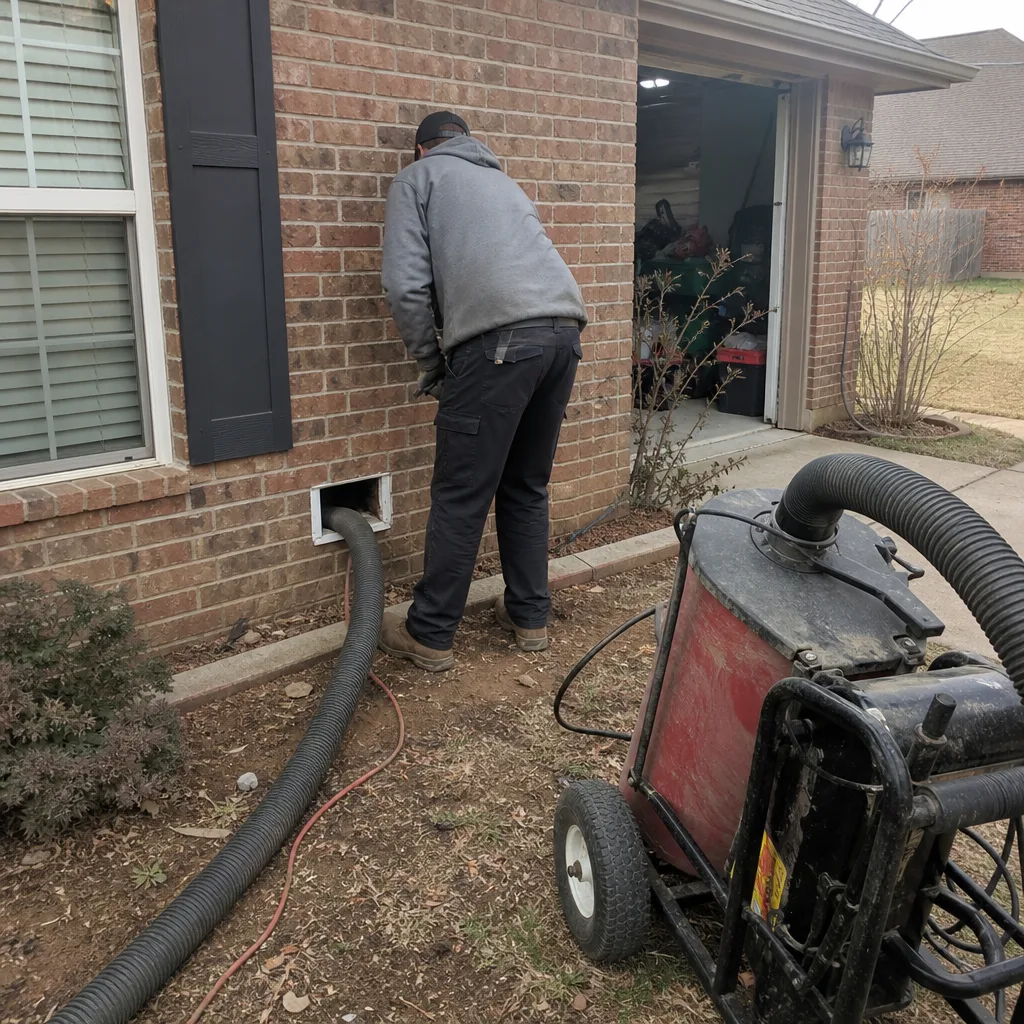 Before
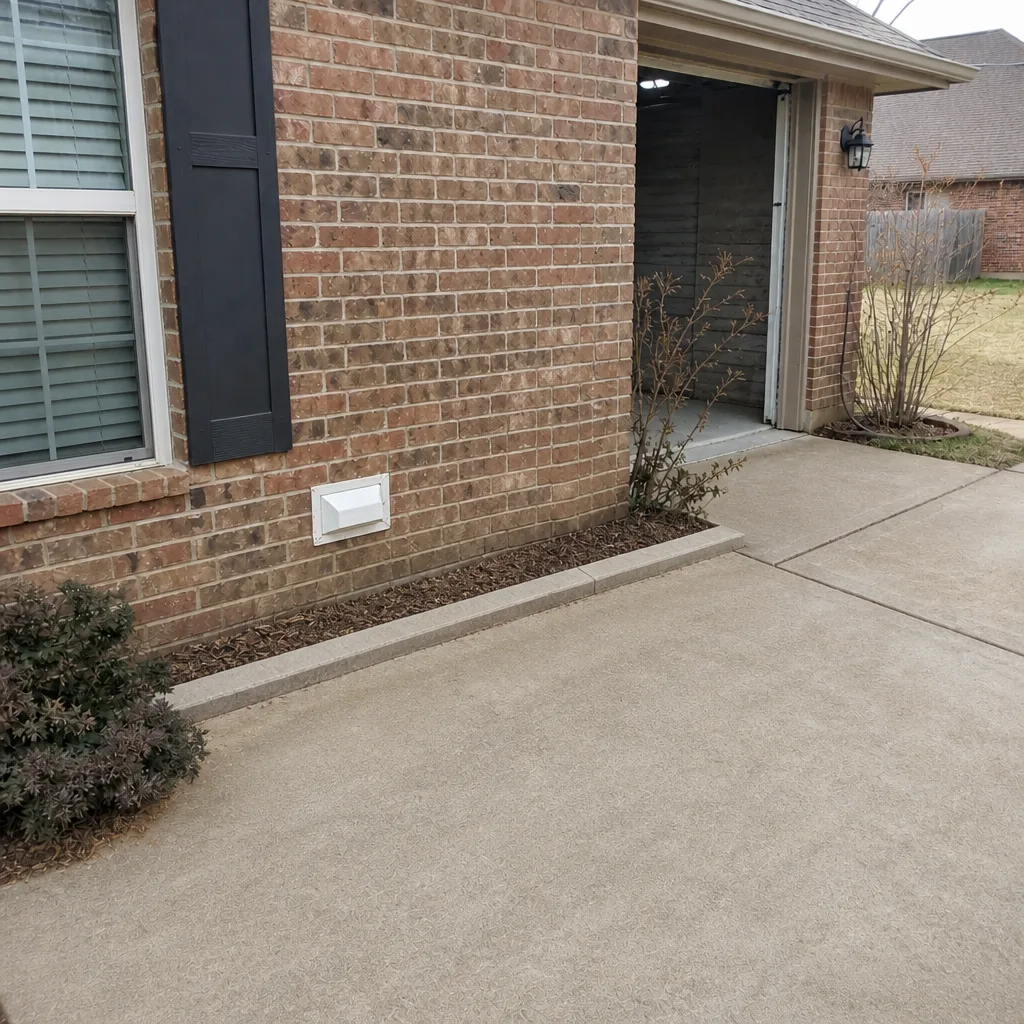 After
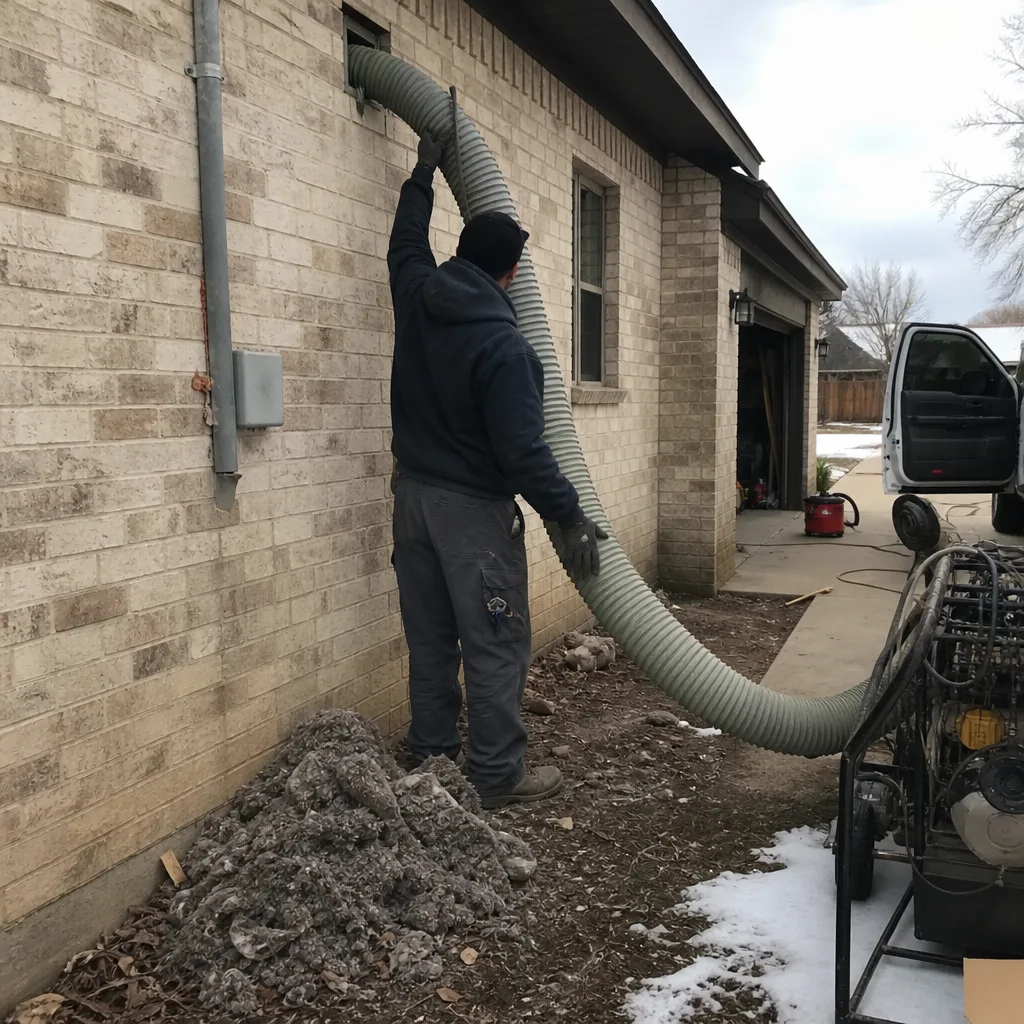 Before
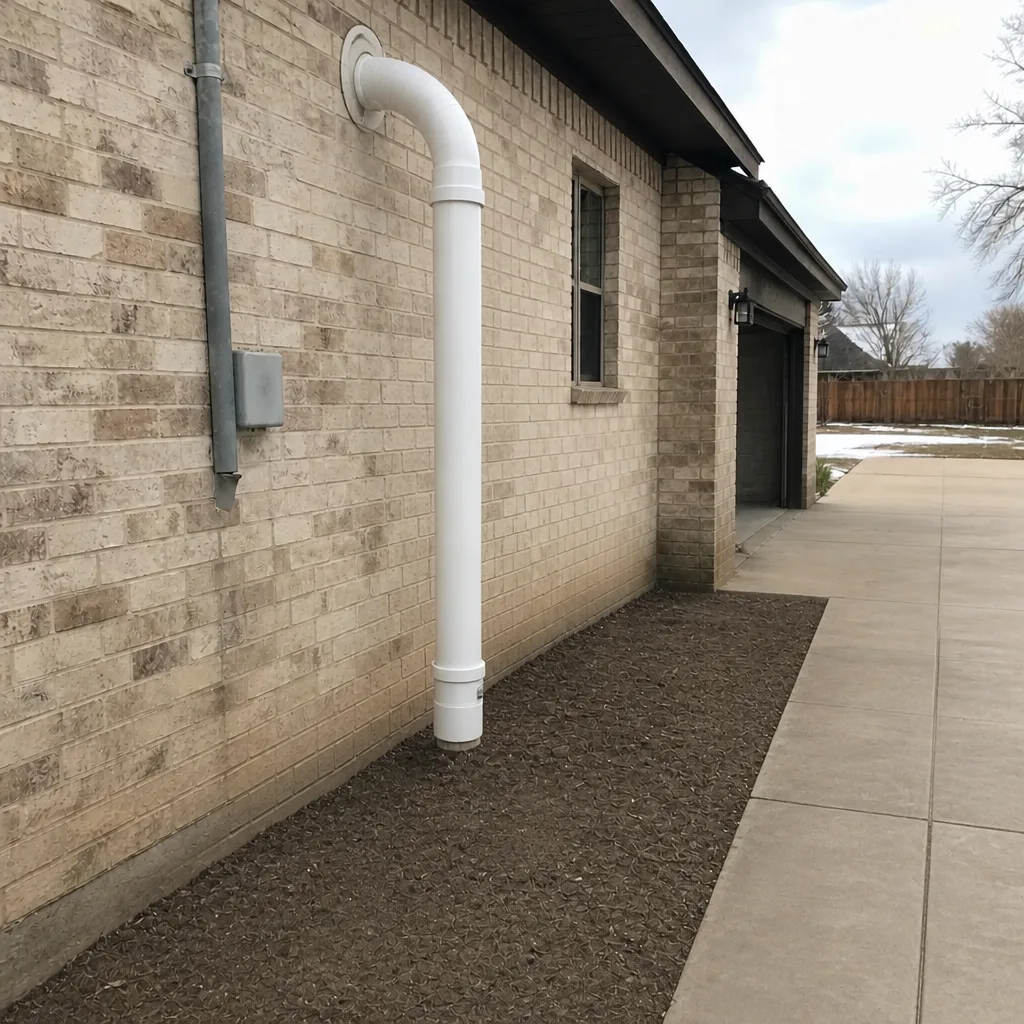 After
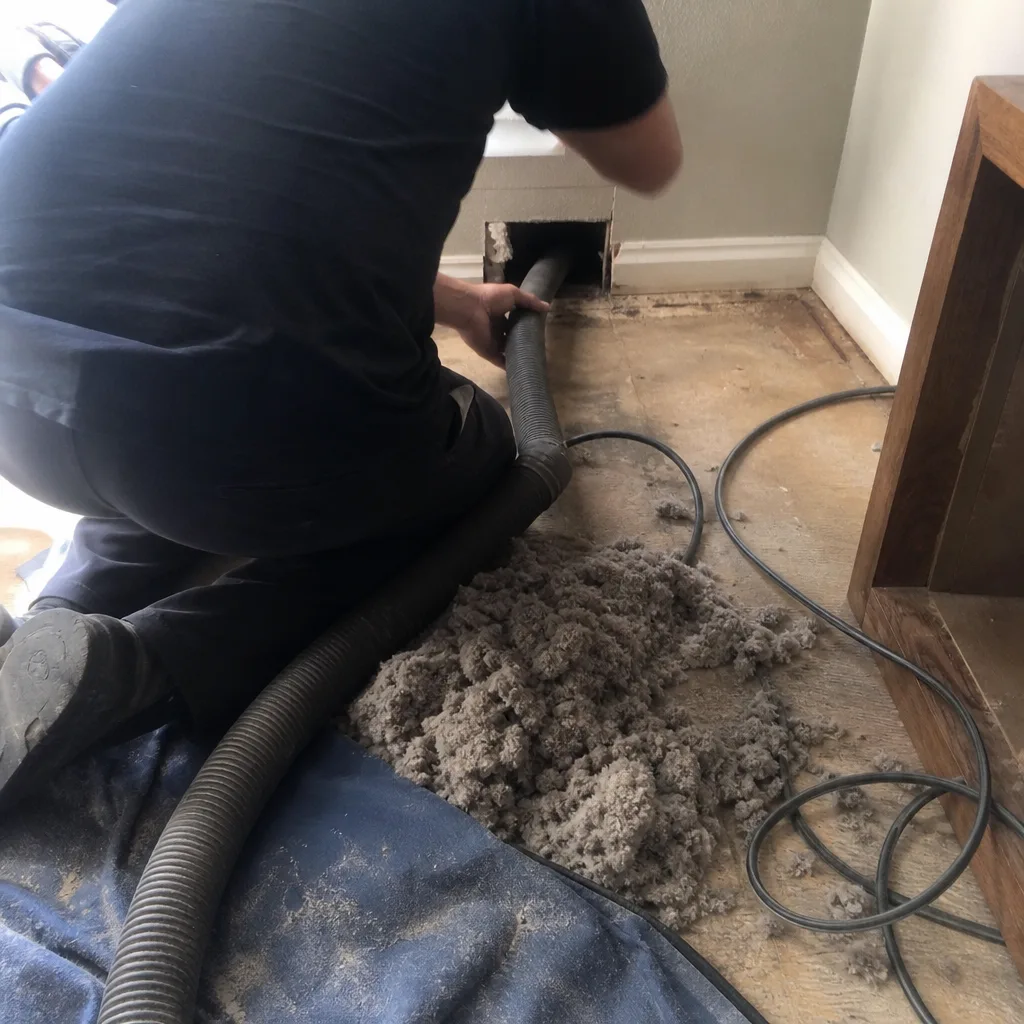 Before
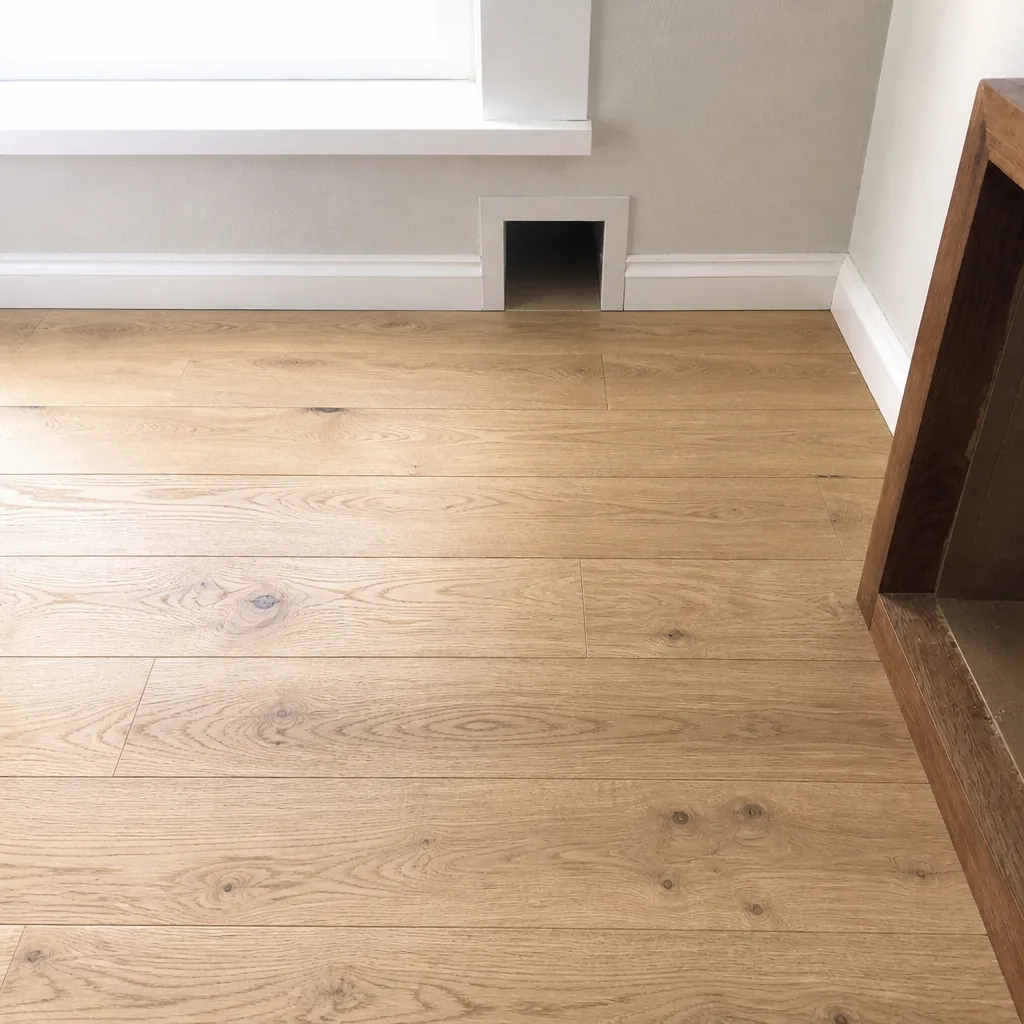 After
When to Call a Professional
Some observations are safe to act on with a call. Reach out if any of these apply: dust returns within a couple of weeks of a previous cleaning; one or more rooms never get proper airflow; you smell musty, damp, or stale air when the system runs; you’ve had a renovation in the last year and the returns pulled in debris; a flex run is visibly disconnected or crushed in your attic or crawlspace; or your dryer is taking longer than it used to. If you see scorched wiring, a burnt smell, or evidence of electrical damage at the air handler, stop the system and call an HVAC technician. Duct Cleaning Edmond offers free estimates in Edmond. Call (844) 461-1541. We answer 24/7. Fast dispatch from 7am to 7pm, Sunday through Friday. Our technicians have up to 13 years of experience, and we inspect before we clean so your estimate reflects the actual fault, not a guess.
Frequently Asked Questions
Because the cleaning redistributed the debris instead of extracting it. When a cleaning crew uses air pressure without containment-grade negative pressure and HEPA extraction, dust that was settled inside the ducts gets pushed into the airstream and into your rooms. If your dusty-house symptom returned quickly after a professional job, the second most likely cause is a duct leak pulling attic or crawlspace air into the system. Call (844) 461-1541 for a free estimate that includes a repair inspection, not just a cleaning quote.
Dirt is a cleaning problem; a broken duct is a repair problem, and the tell is whether the symptom is about air quality or air delivery. Dust returning frequently and visible contamination at the register boots point to dirt. A room that stays hot or cold no matter what, or a duct run you can see that’s loose, crushed, or disconnected in the attic, points to a repair. If both are present, repair first, then clean.
No, not on its own. Uneven airflow in Edmond homes is almost always a balance problem: a damper closed too far, a leaking duct joint, or a missing return path. Cleaning makes the ducts cleaner, but it doesn’t rebalance the system. A proper inspection checks the return path, damper positions, and duct seals first.
Because moisture, not just dirt, is in the system. Oklahoma humidity, condensate issues, and duct runs through humid attic or crawlspace space all contribute. Cleaning helps only after the moisture source is identified, and in some cases you’ll want to inspect the air handler cabinet and plenum before scheduling a clean. Call (844) 461-1541 for a free estimate and we’ll help you sort out which is which.
A mechanical agitation tool like a Rotobrush rotary brush system and a HEPA-grade extraction unit like Nikro, plus containment-grade negative pressure equipment such as Abatement Technologies. Air-pressure-only cleaning redistributes debris. Mechanically agitated and HEPA-extracted cleaning removes it. If a crew arrives with a shop vac and no containment, that’s the answer to what kind of clean you’re getting.
There’s no single answer, because it depends on the system. Homes with pets, recent renovations, allergy concerns, or visible contamination at the registers usually benefit sooner rather than later. Homes with intact systems and clean filters can go longer. The better question is whether a symptom exists: dusty air, musty smell, uneven airflow, or post-renovation debris. If none of those are present, you may not need a cleaning at all, and we’ll tell you that on the estimate. Call (844) 461-1541 for a free estimate.
The Bottom Line
Most duct “problems” homeowners in Edmond try to diagnose have a specific root cause inside the system, and matching the symptom to the fault is the whole game. Dust returning after a cleaning usually means extraction didn’t happen or a leak is pulling in new material. Uneven airflow almost always means damper, seal, or return imbalance. Musty smell means moisture, not just dirt. A broken duct stays broken after cleaning, and cleaning a broken system just wastes a visit. If you get the diagnosis right, the fix is straightforward. If you get it wrong, you’ll pay for the same clean twice. Give us a call at (844) 461-1541 and we’ll inspect first, quote honestly, and fix what we find, whether that’s a clean, a repair, or both in the Edmond area. We use professional IAQ equipment on every job, including air duct cleaning with Rotobrush and Nikro, and we also work with Honeywell and Aprilaire filtration systems when the system needs more than cleaning alone.
Written by the team at Duct Cleaning Edmond.