
Last updated November 15, 2026
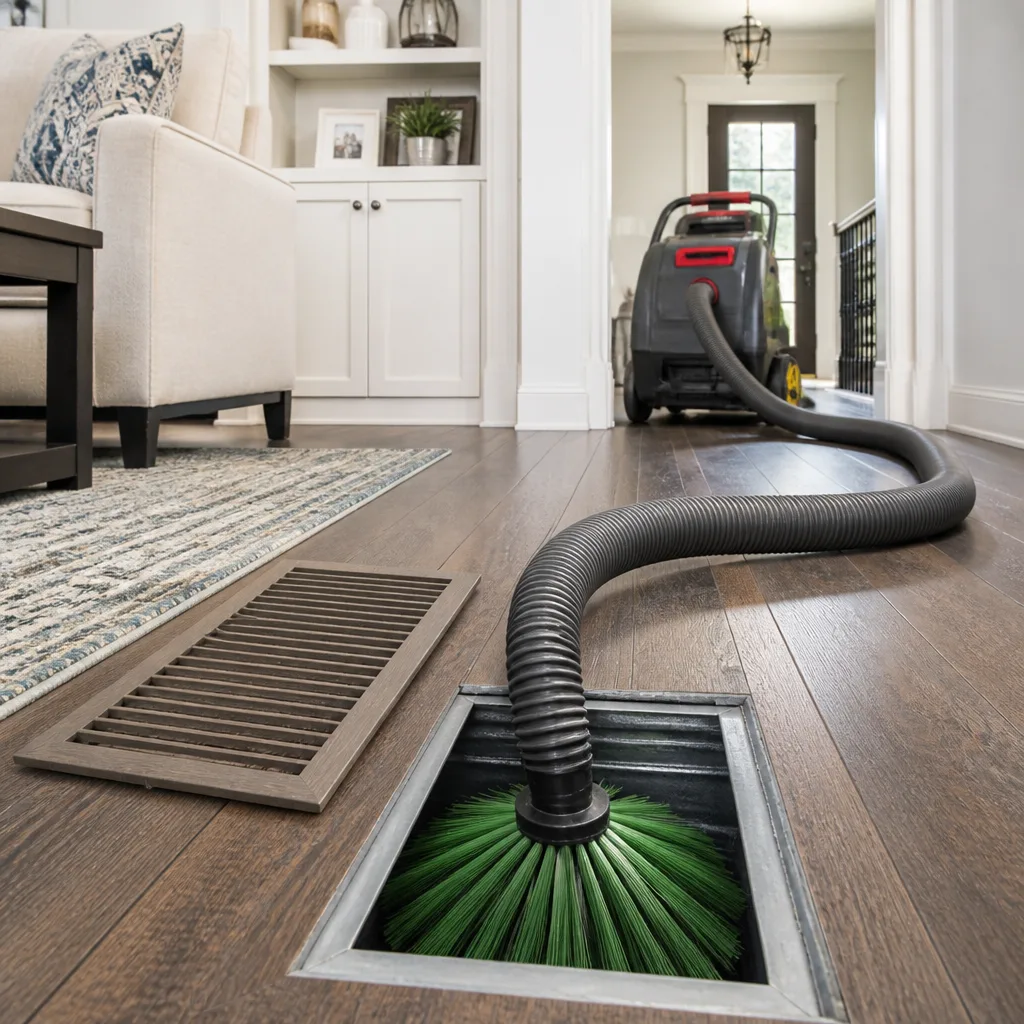 Whole-home duct cleaning
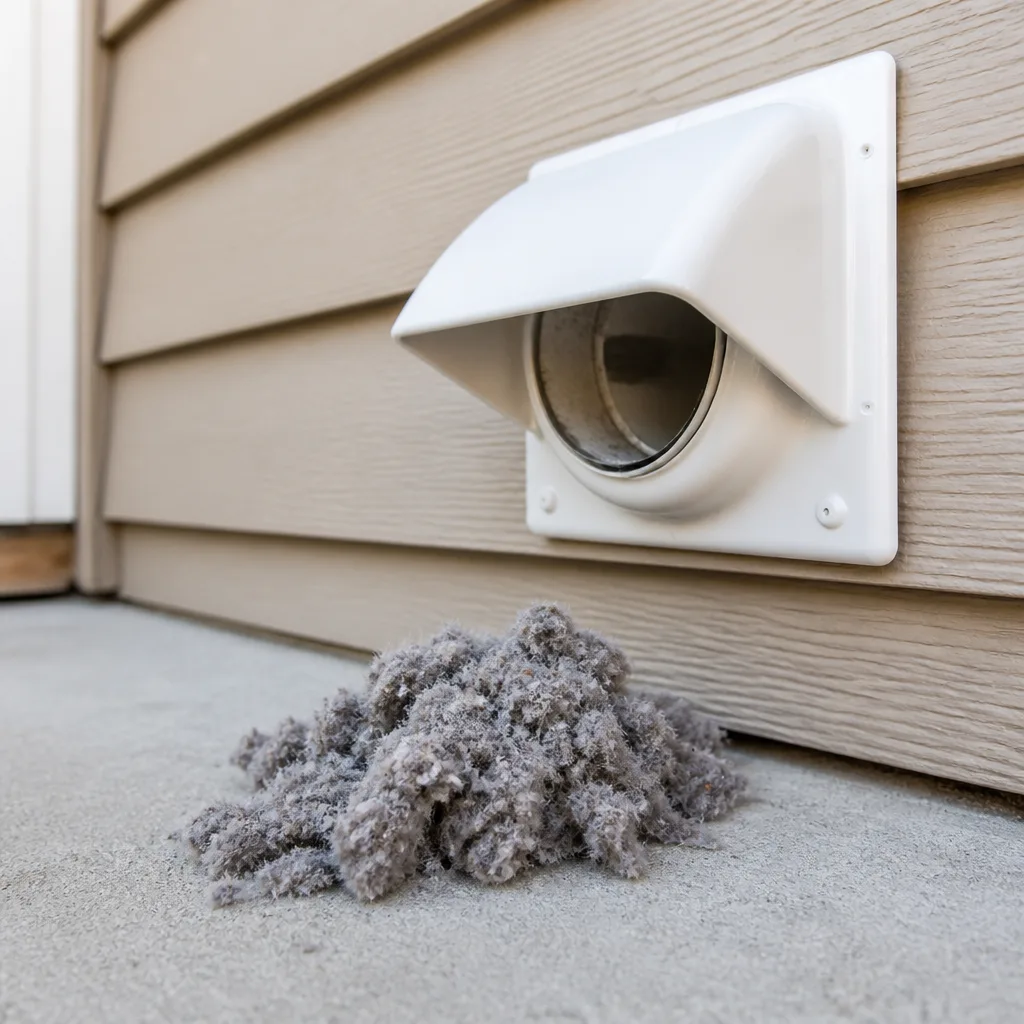 Dryer vent cleaning
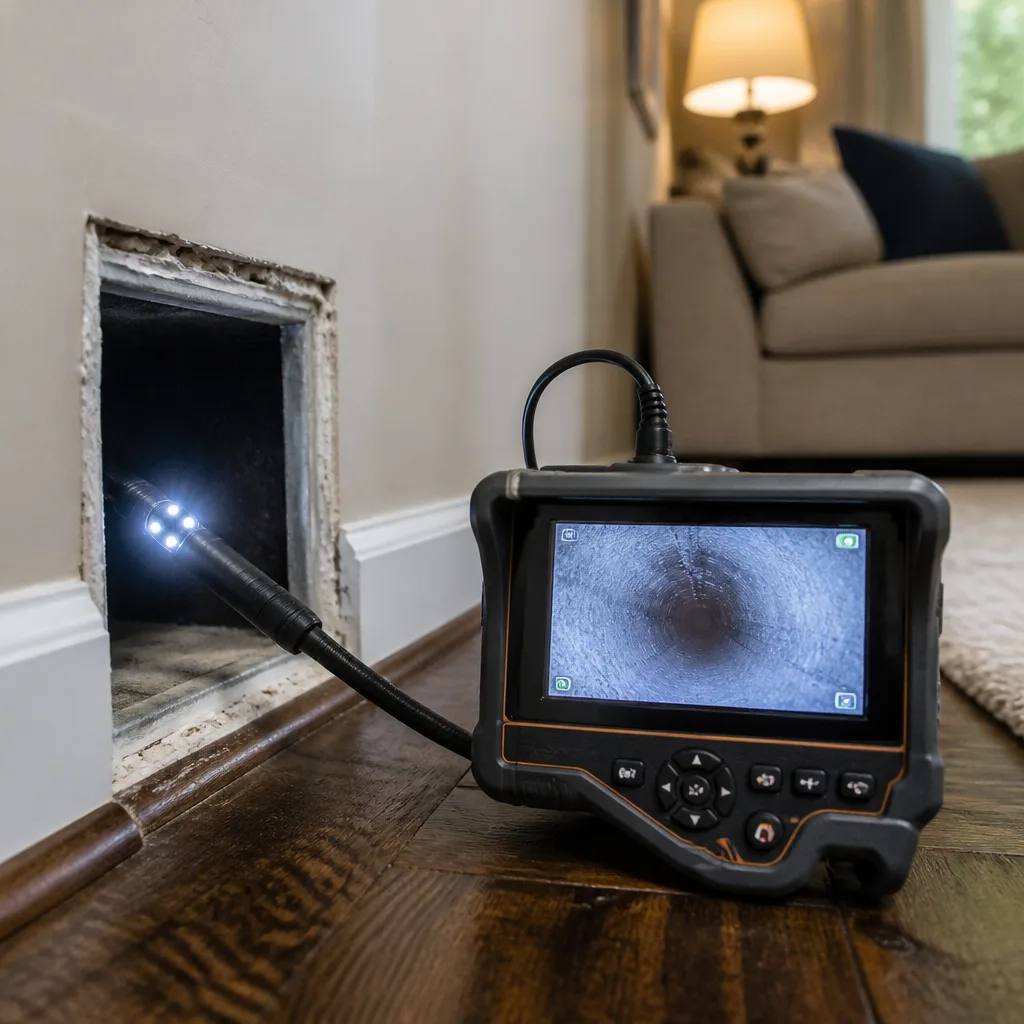 Camera inspection
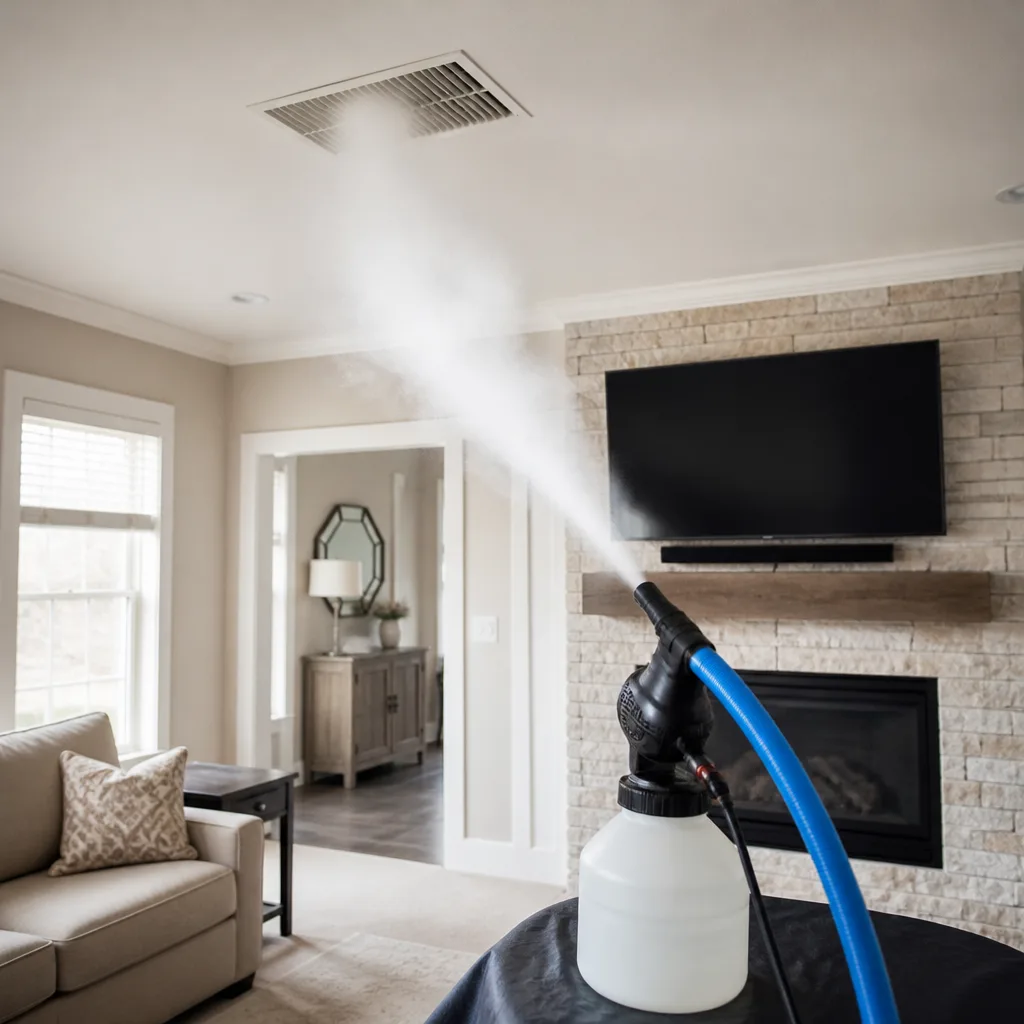 Sanitizing & deodorizing
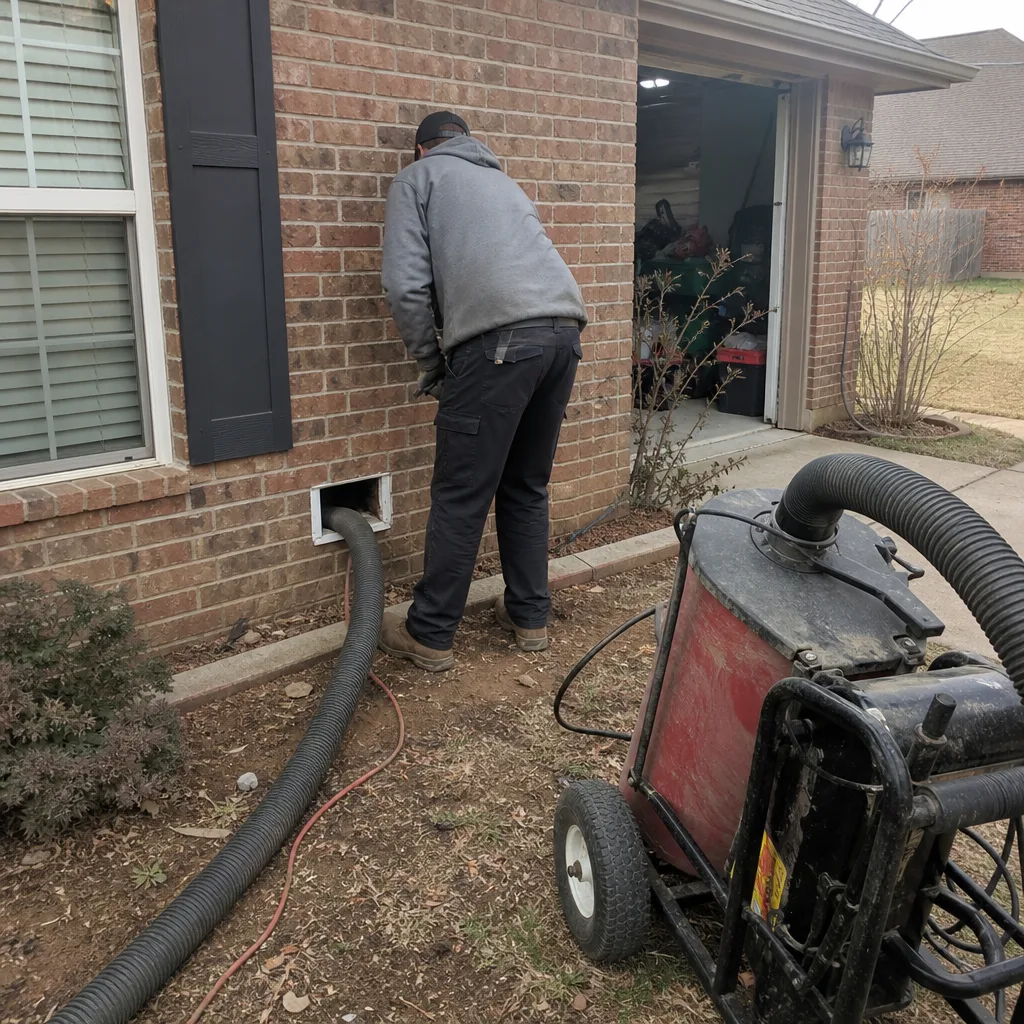
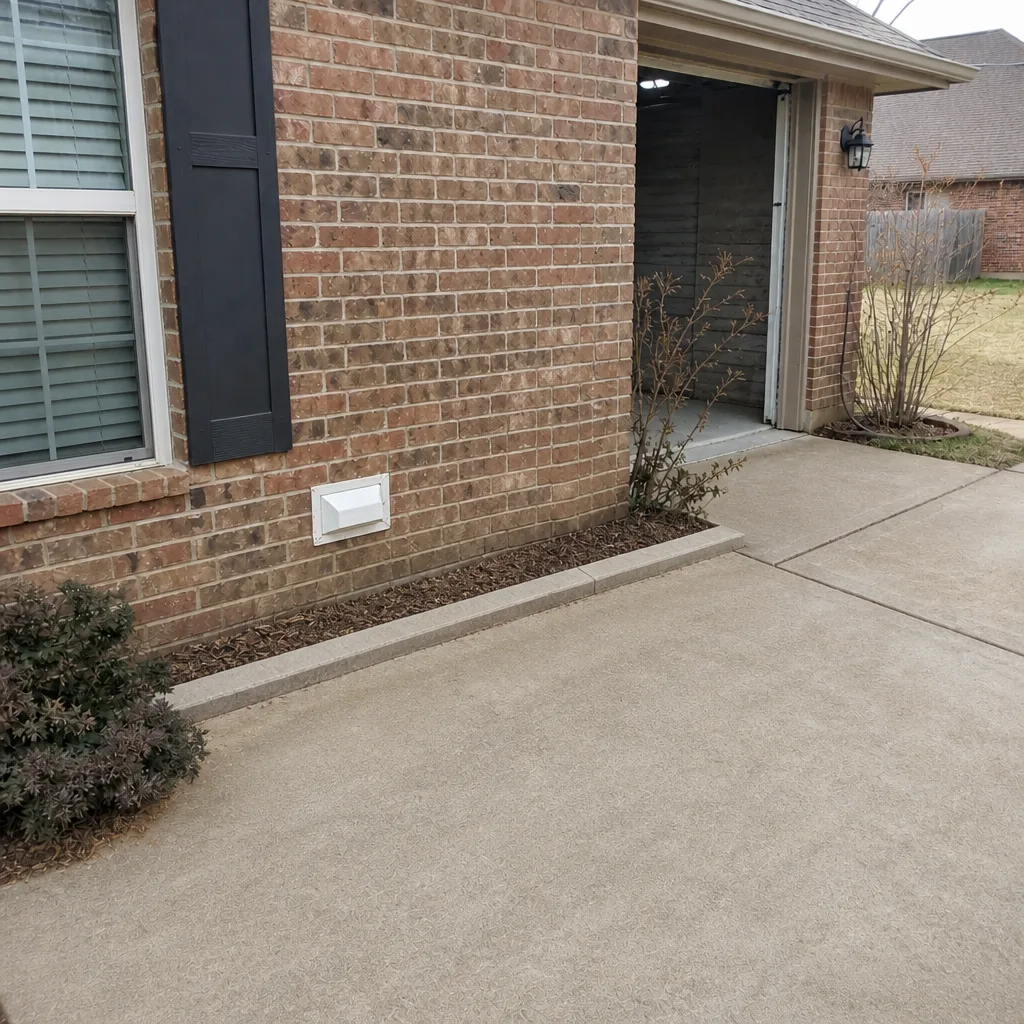
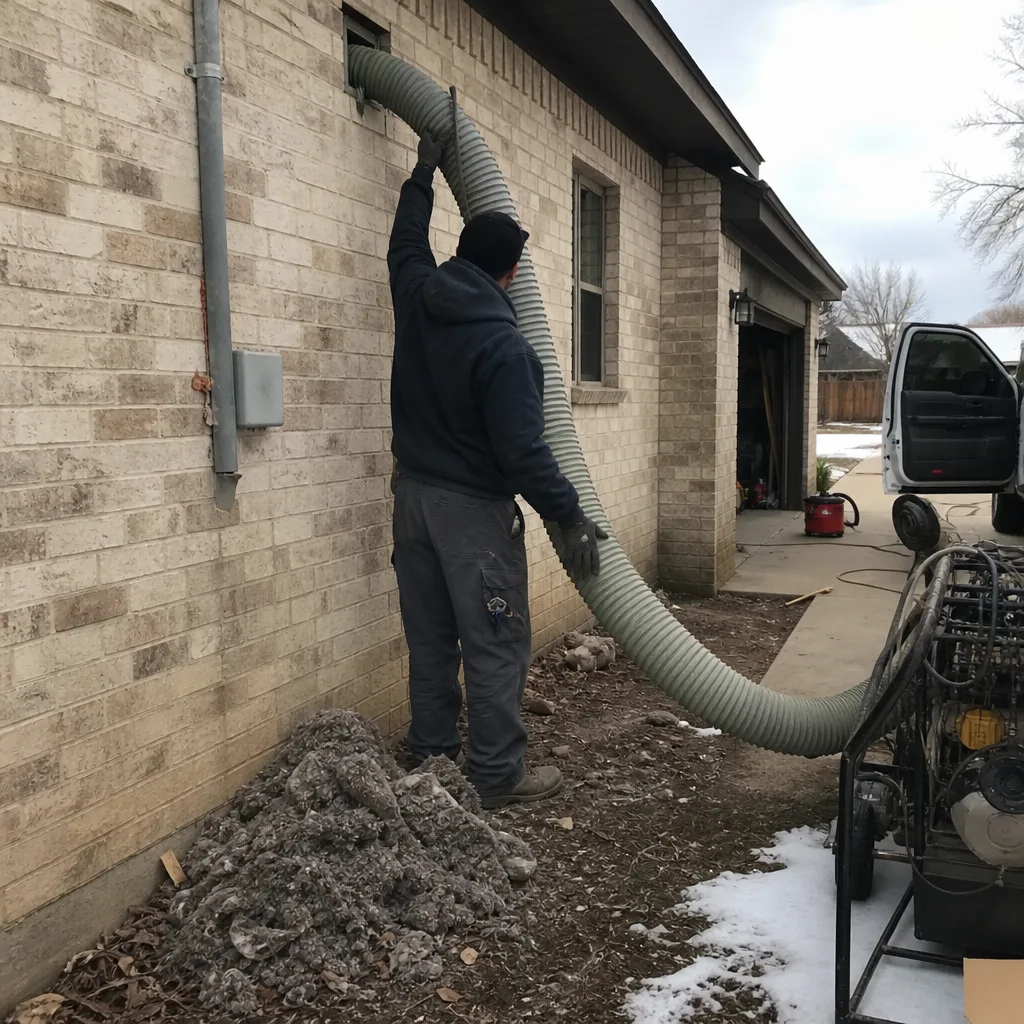
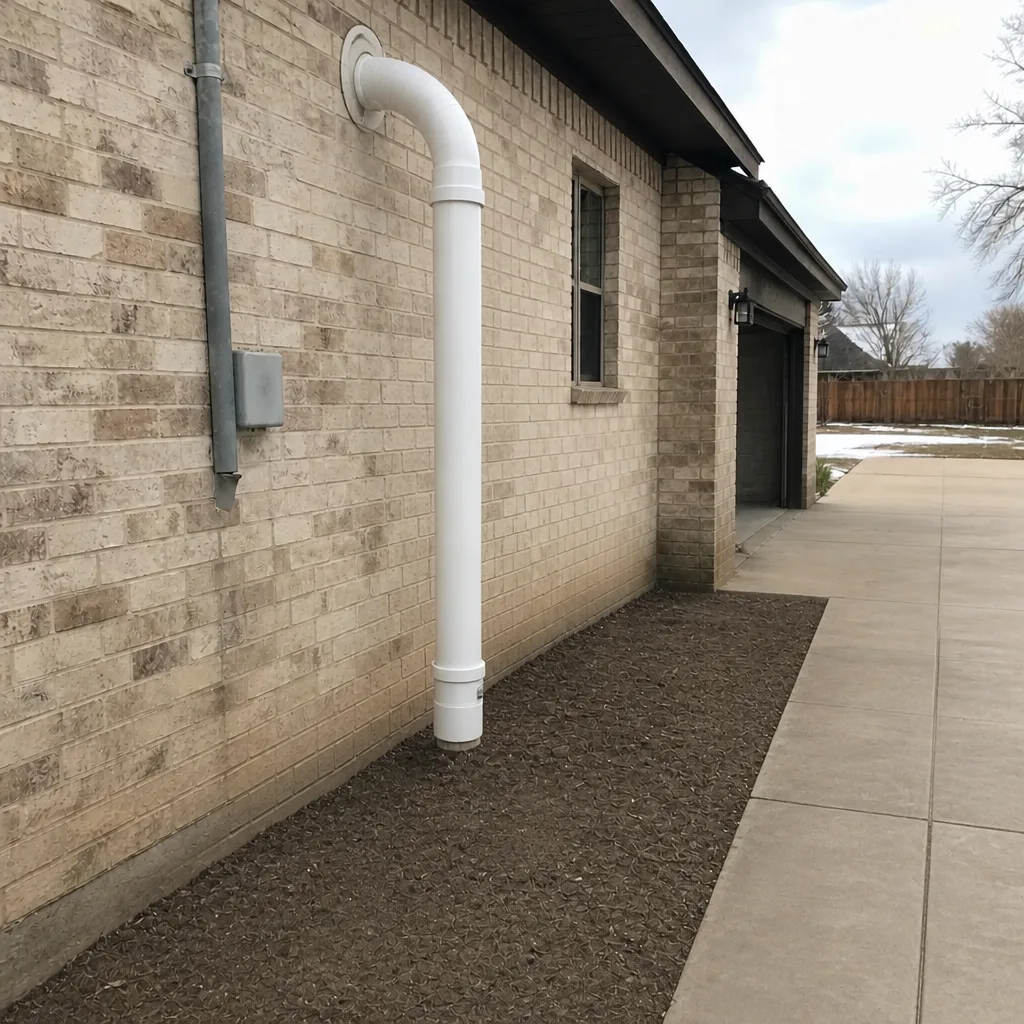
Whole-system duct and dryer vent check with before-and-after photos - you see exactly what came out of your vents
That "$99 whole-house special" is a bait ad - the real number appears once they are in your hallway, or the "clean" is a shop-vac at the register. We photograph the inside of your ducts before and after instead.
Air Duct Cleaning Emergency Preparedness Guide for Edmond Homes
Most homeowners assume a filter change handles everything. It doesn’t. When smoke, floodwater, or storm debris pushes particles into a duct system while the air handler is still running, that material doesn’t sit on the filter. It coats the duct lining, the plenum, the coil face, and the interior of every branch line. Changing the filter afterward removes almost none of it, and some of it can off-gas or re-aerosolize for weeks. The window that decides how bad this gets is the first 24 to 48 hours. In this guide, we walk through exactly what to shut down and in what order, how to tell contamination from simple exposure, what a subfloor or crawlspace system needs after flooding, what to tell a contractor when you call, and what to document for insurance before any cleaning begins. It is written for Edmond homes specifically, because the storm patterns, soil, and housing stock here change the answer.
Quick Answer
After a smoke, flood, or severe storm event in Edmond, shut off the air handler and set the thermostat to OFF before doing anything else, keep the system off until the ductwork can be assessed, and document conditions with photos and any air quality readings before cleaning. If water reached subfloor or crawlspace ductwork, treat 72 hours as the deadline for drying and assessment to prevent mold colonization. A duct system that was exposed but not contaminated usually needs cleaning and a filtration review; a system that was contaminated needs professional mechanical agitation and HEPA extraction, plus repair of any compromised seams or flex runs.
Styles & brands we work with
- Whole-home duct cleaning
- Dryer vent cleaning
- Camera inspection
- Sanitizing & deodorizing
Table of Contents
- What to Do in the First 24 Hours After Smoke, Flood, or Storm Damage
- Contaminated or Just Exposed? How to Tell the Difference
- Wildfire Smoke Events and Your Duct System
- Post-Flood Protocol for Subfloor and Crawlspace Ductwork
- What to Tell a Contractor When You Call After a Contamination Event
- Documentation for Insurance Claims Before Cleaning Begins
- What Professional Emergency Duct Cleaning Actually Involves
- The Overlooked Second System: Dryer Vents After Storm Damage
What to Do in the First 24 Hours After Smoke, Flood, or Storm Damage
The single most important action in the first hour is stopping air movement through the system. A running air handler pulls whatever is in the return air path through the entire duct network and deposits it on surfaces that are hard to reach and expensive to clean. Order matters, and it matters more than people expect.
- Set the thermostat to OFF. Not to “fan on,” not to “auto.” Off. The fan is what moves contamination through the system.
- Cut power at the air handler disconnect. A thermostat can be overridden by a schedule or a stuck relay. The disconnect at the unit or the breaker panel is definitive. If the unit sits in flood-affected space, do not touch it until the power is off at the panel.
- Close the outdoor air intake and any fresh-air damper if your system has one. Many Edmond homes with newer construction have a dedicated fresh-air duct tied to a controller. Closing it stops the system from pulling storm or smoke air into the return.
- Seal supply and return registers with plastic sheeting and painter’s tape if the home has active smoke or debris infiltration. This is temporary. It keeps additional material out while you wait for assessment.
- Photograph everything before touching it. Register faces, filter, coil area, any visible staining or debris, and any water line on drywall or framing. Timestamped photos taken before cleanup carry far more weight with adjusters than photos taken afterward.
- Record what happened to the system. Was the air handler running during the event? For how long? Did the system cycle on automatically through a schedule? A written note of the timeline is the difference between a claim that gets paid and one that gets argued.
Do not run the system “to see if it still works” before assessment. Do not run the fan to try to dry out a wet system. Do not start pulling flex duct apart to inspect it yourself. Each of those actions either spreads contamination or creates a repair problem you didn’t have ten minutes earlier. For Edmond homeowners after a storm, the right instinct is to stop the machine, document, and call.
Contaminated or Just Exposed? How to Tell the Difference
Exposure and contamination are not the same thing, and knowing which one you’re dealing with determines how fast you need to move. We’ve seen a lot of homeowners rush to book a full duct clean after a smoke event when the system was fine, and we’ve seen others wait weeks when the ducts genuinely needed immediate work. Here’s how to think about the difference.
What “exposed” means
A system was exposed if the event happened near the home but air movement into the ductwork was minimal or was shut down quickly. Common signs of exposure without contamination include:
- Smoke or dust smell in the home that fades within a day or two of ventilation and cleaning surfaces
- A filter that shows light discoloration but no heavy loading
- No visible debris behind return grilles when you look with a flashlight
- No water in the duct, no staining on registers, no musty odor
Exposure typically means the ducts need a standard air duct cleaning and a filter or filtration review, not an emergency response.
What “contaminated” means
A system was contaminated if material actually entered the duct interior and deposited. Indicators that push you toward urgent professional assessment:
- Visible soot, ash, or fine dark particulate inside the return plenum or on the coil face
- A persistent acrid or musty odor that returns as soon as the system runs
- Water staining, dampness, or moisture readings in ductwork, especially in subfloor or crawlspace runs
- Debris, insulation fragments, or roofing material found in returns after a storm
- Known air handler operation during a smoke or flood event
- Symptoms in the household that show up or worsen when the system runs
If two or more of those apply, treat the system as contaminated and stop running it until a professional can look at it. In Edmond, the timing on this decision matters because summer heat pushes homeowners to restart the AC within hours of a smoke event, which is exactly the wrong move if the ducts took on material.
Wildfire Smoke Events and Your Duct System
Smoke from regional wildfires and controlled burns moves into central Oklahoma on prevailing south and southwest flow in spring and summer, and into Edmond homes through the same paths that bring in outdoor air: the fresh-air intake, door and window gaps, and any return duct leakage in the attic or garage. The particulates that enter the return while the air handler runs don’t stay in the airstream. They deposit on duct lining and coil surfaces, and some of the volatile compounds in that smoke off-gas for weeks afterward.
The practical response sequence for a smoke event:
- Shut the system down per the steps above if the indoor air is visibly hazy or smells strongly of smoke.
- Run a portable HEPA air cleaner in the main living space if you have one. If not, keep windows and doors closed and ventilation minimized during the worst of the event.
- Change the filter when the smoke clears, but don’t assume the filter change solves the problem if the system ran during the event. A filter catches what passes through it, not what has already deposited downstream.
- Have the system assessed before restarting if the duct interior shows visible particulate at the return plenum or registers.
For homes with a high-MERV or media filter cabinet, an Aprilaire or Honeywell filtration cabinet can be added or evaluated as part of the assessment. Filtration upgrades help with future smoke events, but they don’t clean out material that has already embedded in duct lining. That takes mechanical agitation and extraction, which is where equipment specifics start to matter.
Post-Flood Protocol for Subfloor and Crawlspace Ductwork
Flooding in Edmond is often not a river problem. It’s a flash-flood and storm-sewer problem, and the homes hit hardest are frequently the ones with subfloor or crawlspace ductwork: pier-and-beam homes in older Edmond neighborhoods, and any home whose duct runs pass through unconditioned or semi-conditioned space. When water reaches those runs, the timeline compresses fast.
The 72-hour window
Mold can begin colonizing wet organic material in 24 to 48 hours under the right conditions, and duct lining, insulation, and any cellulose debris inside the duct qualifies as organic material. By 72 hours, a wet duct system is usually no longer a “dry it out and clean it” situation. It becomes a “replace the affected runs” situation. That’s why the 72-hour mark is the practical deadline for getting an assessment on any wet duct system in Edmond.
What to do, in order
- Confirm power is off at the panel before entering any flooded crawlspace or touching water-damaged equipment.
- Document the water line on framing, duct insulation, and any equipment housings. Photos and measurements both.
- Do not run the system to “help it dry.” Air movement across wet duct lining spreads mold spores through the house.
- Begin structural drying of the crawlspace where it’s safe to do so, with dehumidification and air movement aimed at the structural framing and duct exterior, not the duct interior.
- Get a professional assessment within the first 48 hours. The assessment determines which runs can be cleaned and dried and which ones need to be replaced.
- Keep the records. Moisture readings, photos, and the contractor’s report are the documentation your insurer will want.
Subfloor ductwork in Edmond homes is frequently flex duct suspended from joists, and flex duct that has taken on water is rarely worth trying to salvage. The interior liner traps moisture, and the outer jacket hides it. A repair-and-replace conversation is common here, and it’s the reason our duct cleaning in Edmond service is paired with duct repair rather than treated as a standalone job.
What to Tell a Contractor When You Call After a Contamination Event
The information you provide on the first call determines what equipment and process the contractor brings and whether the visit is a real assessment or a wasted trip. A shop vac and a leaf blower can’t handle a post-smoke or post-flood system, and a company that shows up with that equipment has misread the job. Here’s what to have ready before you call.
- The event type and date. Smoke event, flood, storm debris, or sewer backup. Each one implies a different contamination profile.
- Whether the air handler was running during the event and for how long. This is the single most useful piece of information you can give.
- Where water reached, if any. Subfloor, crawlspace, attic, or living space. Which duct runs.
- What you can see. Visible soot, debris, moisture, staining, or nothing at all.
- What you smell. Acrid, musty, or nothing.
- System configuration. Flex or rigid ductwork, number of zones, filtration setup, and whether there’s a fresh-air intake.
- Any household sensitivities. Allergies or respiratory conditions in the home change the standard for what “clean enough” means.
- Whether an insurance claim is open and whether documentation is needed before cleaning starts.
What you should expect to hear back: they should ask about the air handler, ask about water, ask what filtration is in place, and describe the process they’ll use. If the answer is “we’ll just blow it out,” that’s not a real answer for a contamination event. Professional process here means mechanical agitation with a rotary brush system, HEPA-grade extraction at the source, and containment to keep dislodged material from recirculating into the living space. That’s the difference between a Rotobrush and Nikro setup and a truck-mounted blower with a filter bag. Equipment specificity is the proof of process.
Documentation for Insurance Claims Before Cleaning Begins
Insurers don’t reimburse for work they can’t see the need for. Once cleaning starts, the evidence is gone. The documentation collected before any cleaning is what makes a claim defensible, and it’s the step most homeowners skip.
What to collect
- Timestamped photos of every register before cleaning. Remove the cover, photograph the duct opening with a flashlight illuminating the interior.
- Photos of the filter and the coil, in place, before removal.
- Photos of any water line or staining with a tape measure or straightedge in frame.
- Moisture readings if a contractor or restoration company takes them before cleaning. Ask them to record where each reading was taken.
- Air quality readings if any are taken. Particulate counts, VOC readings, or a qualified indoor air quality assessment. Ask for the raw numbers, not a summary.
- A written contractor assessment describing the conditions found and the recommended scope, dated and signed.
- Copies of the original service records for the HVAC system if you have them. Filter change history, last duct clean if any, and any recent repairs.
- Your own written note of what happened, when the system ran, and what you did in response.
Before any cleaning starts, ask the contractor to confirm they’ll provide a written report with before-and-after photos of your own system and a description of what was found. If they can’t provide documentation, they can’t support a claim. That alone is a reason to choose a different contractor.
What Professional Emergency Duct Cleaning Actually Involves
Emergency duct cleaning after a contamination event is not the same process as routine maintenance, and it isn’t done with a shop vac and a blower. The steps look roughly like this, and you should be able to see each one happen.
The process
- Containment and negative pressure. Abatement Technologies containment equipment keeps the work zone under negative pressure so that dislodged material doesn’t drift into the living space.
- Source capture. Nikro HEPA extraction equipment pulls material at the register or access point rather than letting it travel through the house.
- Mechanical agitation. A Rotobrush rotary brush system physically dislodges buildup from duct lining. Air pressure alone doesn’t remove adhered soot or dried debris, which is why the brush system matters on a post-event clean.
- Component cleaning. Coil, blower, drain pan, and plenum on the air handler side. The ducts aren’t the only contaminated surface.
- Repair of compromised ductwork. Seams, joints, or flex runs that were damaged by water or debris get repaired, not just cleaned. Cleaning a leaking duct and walking away leaves the problem in place.
- Before-and-after photos of your system, taken and shared with you.
- Filtration review. As a Honeywell and Aprilaire authorized installer and servicer, we can evaluate cabinet filtration to prevent the next event from being as bad.
One flat price per system is set by the written estimate before work starts, and it’s the same price whether the work is a routine clean or a post-event contamination job. That’s the structure that prevents bait-and-switch, which is a real concern in this trade.
The Overlooked Second System: Dryer Vents After Storm Damage
Storm events often expose a second ducted system that most homeowners don’t think about. A dryer vent that was already partially clogged can become fully blocked when debris or moisture gets in during a wind event. The fire hazard from a clogged dryer vent is real, and it’s why we treat dryer vent cleaning as a safety service rather than a maintenance item.
After any storm event, check the exterior dryer vent termination. If there’s a visible obstruction, if the flap doesn’t move freely, or if the dryer is taking noticeably longer to dry a load than it did before the event, have the vent assessed. If you’re already having ducts assessed after a contamination event, this is the moment to have both systems looked at in one visit.
Common Mistakes to Avoid
- Running the fan to “clear things out.” This is the single worst thing you can do after smoke or flood exposure. The fan pushes contamination into every branch line and the coil face, and it takes a much more extensive clean to recover.
- Waiting for the smell to fade on its own. Smoke odor that returns whenever the system runs is a sign that material is deposited in the duct lining and off-gassing. Time doesn’t fix that in Edmond’s climate, because summer humidity keeps the duct interior conditions right for continued off-gassing.
- Assuming crawlspace ductwork dries out naturally. In Edmond, crawlspaces stay humid through the summer. Wet flex duct in a subfloor run does not dry out on its own; it molds. The 72-hour window exists for a reason.
- Letting a contractor clean before the documentation is collected. Once the duct is cleaned, the evidence that supported the claim is gone. Insurers won’t reimburse for work they can’t see the need for, so photos, moisture readings, and a written assessment need to come first.
- Hiring based on a coupon. A low headline price that becomes a much larger invoice once the technician is on site is the standard bait-and-switch in this trade. A whole-system price agreed in writing before work begins is the only structure that protects you.
- Having ducts cleaned without having compromised ductwork repaired. A leaking seam or a crushed flex run lets contamination back in. Cleaning without repair is a partial job.
- Skipping the dryer vent. A storm event that affects the duct system often affects the dryer vent at the same time, and a partially blocked vent is a fire risk rather than a comfort issue.
See the difference
 Before
 After
 Before
 After
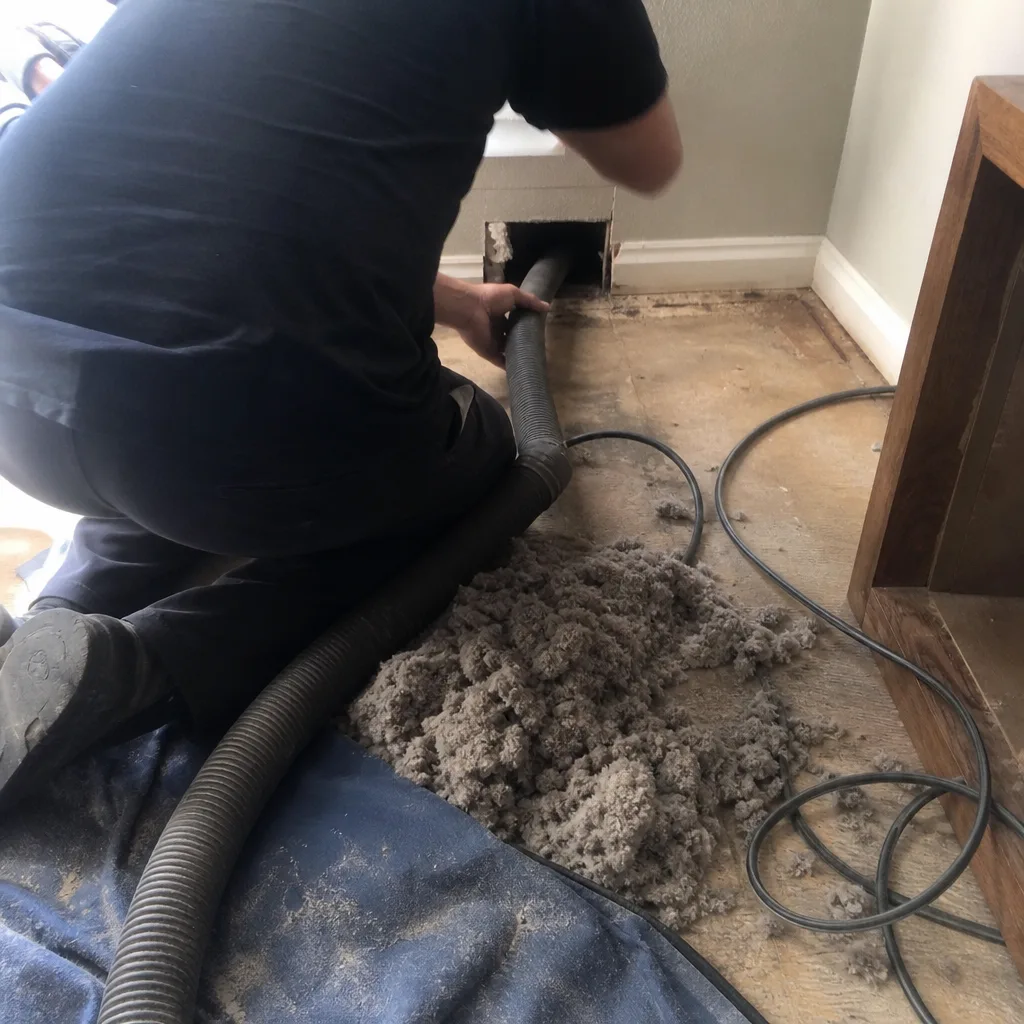 Before
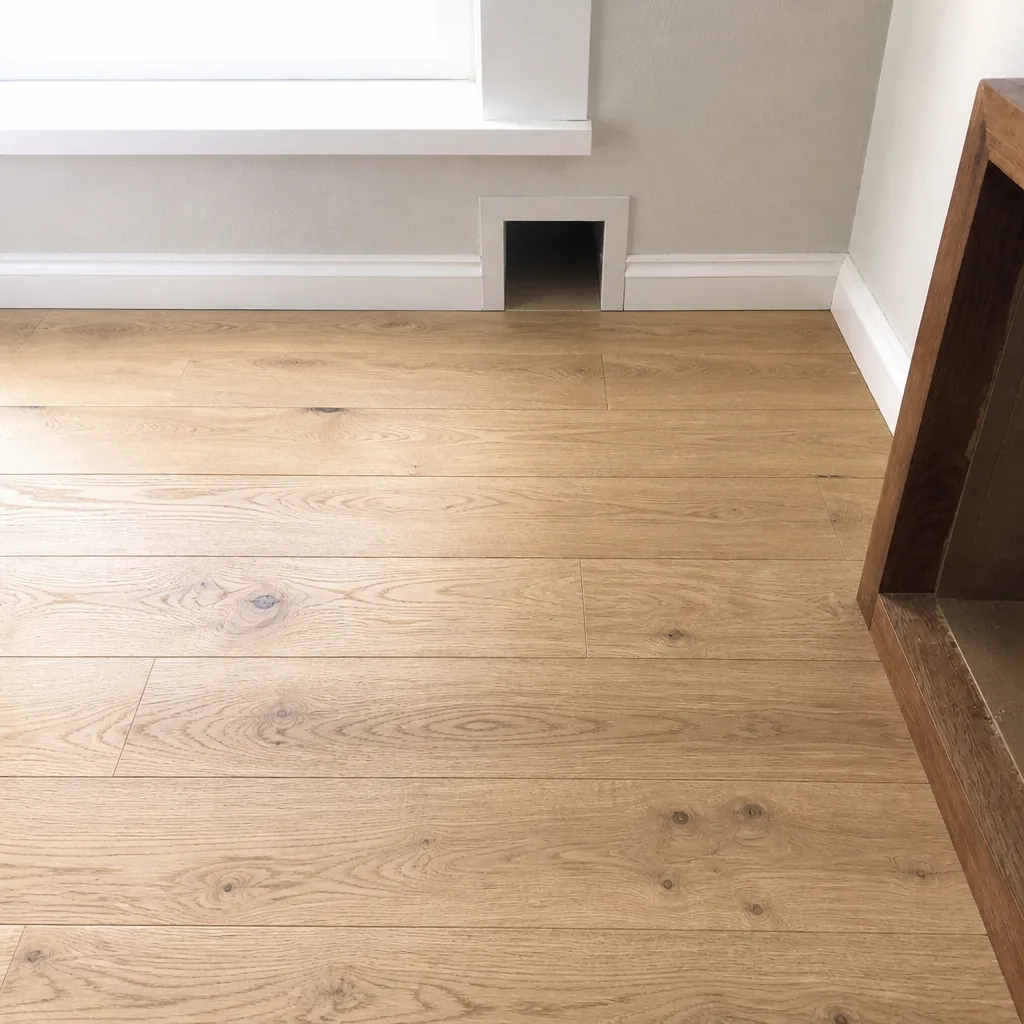 After
When to Call a Professional
Call for an assessment when any of the following is true: the air handler ran during a smoke, flood, or storm event; water reached subfloor, crawlspace, or attic ductwork; odors return whenever the system runs; visible soot, debris, or moisture is present at registers or the coil; anyone in the home has respiratory or allergy symptoms that worsen when the system runs; or you’re filing an insurance claim that will require documentation of conditions before cleaning. For Edmond homeowners, our Edmond service covers each of these scenarios, and the assessment is free. Duct Cleaning Edmond offers free estimates in Edmond. Call (844) 461-1541. We answer 24/7. Fast dispatch from 7am to 7pm, Sunday through Friday. If you want a clear picture of the routine process we bring to every home, our main page walks through it.
Frequently Asked Questions
Within the first 48 hours if the air handler was running during the event and the system shows signs of contamination. The response window matters because deposited material can off-gas for weeks, and running the system in the meantime spreads it further. Call (844) 461-1541 for an assessment; estimates are free.
No, not if the system ran during the event. A filter catches what passes through it going forward, but it does not remove material that has already deposited on duct lining, the coil, or the plenum. Running the system after a filter change simply pushes that material back through the home. Get an assessment first.
Exposure means the system was near the event but material wasn’t pulled into the ductwork; contamination means material actually deposited inside. Contamination is indicated by visible soot or debris at the coil or registers, odors that return when the system runs, water in the duct, or known air handler operation during the event. Contamination calls for professional mechanical agitation and HEPA extraction, not a standard blow-and-go cleaning.
Because mold can begin colonizing wet organic material within 24 to 48 hours, and duct lining, insulation, and trapped debris qualify as organic material. By 72 hours a wet system typically can’t be dried and cleaned, only replaced. Getting the assessment done inside those first 48 hours preserves the option to save the runs. Call (844) 461-1541 to schedule an assessment; estimates are free.
The event type and date, whether the air handler was running and for how long, where water reached, what you can see and smell, the system configuration, any household sensitivities, and whether an insurance claim is open. That information determines what equipment and process the contractor needs to bring, and a company that doesn’t ask for it hasn’t understood the job.
Coverage depends on your policy and the cause of loss, so confirm with your adjuster before assuming. What we can tell you is that claims are far more likely to be approved when the documentation is collected before cleaning starts: timestamped photos, moisture readings, a written assessment, and before-and-after photos. We can work with your insurer on documentation.
For most Edmond homes, every few years is fine, plus after any contamination event. Homes with pets, recent renovations, allergy concerns, or older construction with more duct leakage may need more frequent attention. The trigger isn’t a calendar date; it’s visible debris, odors, or an event. Call (844) 461-1541 for an exact recommendation.
Yes, especially after a storm event. Wind-blown debris and moisture can turn a partially clogged dryer vent into a fully blocked one, and that’s a fire hazard rather than a comfort issue. Having both systems assessed in one visit is more efficient than booking them separately.
The Bottom Line
Edmond’s storm, wildfire smoke, and flash-flood risk make ductwork contamination a real scenario, not a hypothetical one. The variables that decide the outcome are the same each time: whether the air handler ran during the event, whether water reached subfloor or crawlspace ductwork, how fast the assessment happens, and whether documentation was collected before cleaning started. Shut the system down and document first. Treat 72 hours as the deadline on any wet duct system. Tell the contractor exactly what happened so they bring the right equipment, and ask for a whole-system price in writing before work starts. Our technicians have up to 13 years of experience with contamination events, and our equipment stack is chosen for real extraction rather than a shop-vac clean.
If a smoke event or storm has you wondering whether your Edmond home’s ductwork took on contamination, don’t guess at it. Call (844) 461-1541 for a free estimate. We answer 24/7. Fast dispatch from 7am to 7pm, Sunday through Friday. We’ll assess the system, document what we find, give you a flat price in writing, and repair what needs repairing rather than just cleaning around it.
Written by the team at Duct Cleaning Edmond.